
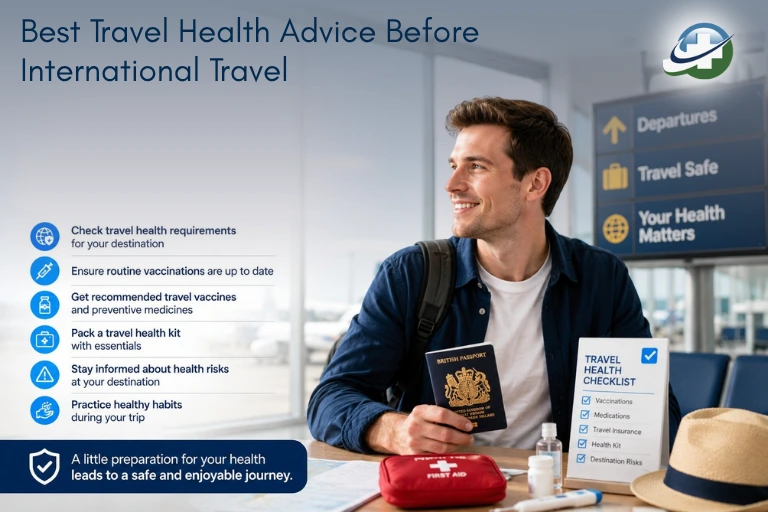
International travel is exciting. New places, new food, new people. But if you skip the health prep, even the best trip can turn into a nightmare fast. The good news? A little planning before you leave home can protect you from the most common travel-related health problems. This guide covers everything you need to know about travel health before going abroad, written in plain language so it actually makes sense.
Why Travel Health Matters More Than You Think
Most people spend hours researching flights, hotels, and restaurants. But travel health? That often gets a five-minute Google search the night before departure.
Here is the reality: different countries carry different health risks. Water quality changes. Insects carry diseases that do not exist where you live. Food preparation standards vary. And your regular doctor back home may not be trained in travel medicine.
Preparing your health before international travel is not about being paranoid. It is about being smart. One illness abroad can cost you thousands in medical bills, ruin your entire trip, or in serious cases, have long-term health consequences.
Start With a Travel Health Consultation
The very first thing you should do when planning international travel is book a travel health consultation. Ideally, this should happen at least 4 to 6 weeks before your departure date.
A travel medicine specialist or a trained healthcare provider will:
- Review the specific health risks of your destination
- Check your current vaccination history
- Recommend any vaccines you may need
- Discuss food and water safety based on where you are going
- Talk about altitude, climate, and any personal health conditions you have
If you have a chronic health condition like diabetes, heart disease, or asthma, this consultation becomes even more important. Your healthcare provider can help you prepare a travel health plan tailored to your needs.
You can find travel health clinics at major hospitals, international airports, and many public health departments. In India, government-approved travel health centers are available in most metro cities.
Vaccinations: Do Not Leave This for Last Minute
Vaccines are one of the most effective tools in travel health. Some vaccines need to be given weeks or even months before departure because they require multiple doses to be effective. This is exactly why early planning matters.
Some vaccines are required by law to enter certain countries. Others are strongly recommended based on your destination.
A few important points about travel vaccinations:
- Routine vaccines like those for measles, hepatitis, and typhoid should always be up to date before travel
- Some regions require proof of vaccination at the border
- Children and elderly travelers may need different vaccination schedules
- Pregnant travelers have special considerations and should always consult a doctor before getting any travel vaccines
Never rely on online lists alone to decide what vaccines you need. Your healthcare provider will assess your individual health history and your specific travel itinerary.
Food and Water Safety While Traveling
“Traveler’s diarrhea” is the most common travel-related illness in the world. It sounds minor but it can completely ruin a trip and leave you dehydrated and exhausted for days.
The main cause is contaminated food and water. Here is how to reduce your risk:
Water safety:
- Drink only bottled water or water that has been properly boiled and filtered
- Avoid ice cubes in drinks unless you are sure the water source is safe
- Use safe water even for brushing your teeth in high-risk destinations
- Carbonated bottled drinks are generally safer than still water if you are unsure
Food safety:
- Eat food that is cooked and served hot
- Avoid raw salads and unpeeled fruits and vegetables in areas with poor water quality
- Street food can be safe if it is freshly cooked in front of you and served hot
- Be cautious with raw seafood, unpasteurized dairy, and buffet food that has been sitting out
The golden rule many travel health experts use: “Boil it, cook it, peel it, or forget it.”
Insect Protection and Vector-Borne Diseases
Mosquitoes, ticks, and other insects can carry serious diseases including malaria, dengue fever, Zika virus, yellow fever, and Japanese encephalitis. The risk depends entirely on where you are traveling and during which season.
Before you travel:
- Research whether your destination has active mosquito-borne disease transmission
- Ask your travel health provider about preventive measures appropriate for your trip
- Carry insect repellent with a proven active ingredient approved by health authorities
- Pack lightweight long-sleeved clothing for evenings, especially in rural or forested areas
- Use mosquito nets when sleeping in areas with high mosquito activity
Malaria in particular requires special attention. It is found in large parts of sub-Saharan Africa, South Asia, and parts of Central and South America. Your travel health provider can advise you on whether preventive measures are necessary based on your exact travel plans.
Building Your Travel Health Kit
A well-stocked travel health kit can save you a lot of stress when you are far from home. You do not need to pack a pharmacy, but a few key items make a real difference.
A basic travel health kit should include:
- Personal prescription medications with enough supply for your entire trip plus extra
- A copy of your prescriptions and medical records in English (and ideally in the local language)
- Hand sanitizer and soap for regular hygiene
- Oral rehydration salts for treating dehydration from diarrhea or heat
- Adhesive bandages and basic wound care supplies
- Sunscreen with adequate SPF for your destination’s climate
- Insect repellent
- A digital thermometer
- Any allergy-related supplies if you have known allergies
Always carry essential medications in your hand luggage, never in checked baggage. Delays and lost luggage happen, and running out of critical medication abroad is a serious problem.
Travel Insurance: Do Not Skip This
Travel health insurance is not optional if you are traveling internationally. Medical treatment abroad, especially emergency treatment or hospitalization, can be extraordinarily expensive.
When choosing travel health insurance, look for:
- Coverage for emergency medical treatment and hospitalization
- Medical evacuation coverage, which can cost tens of thousands of dollars without insurance
- Coverage for pre-existing conditions if applicable
- 24-hour emergency assistance services
Some travel credit cards include basic travel insurance, but always read the fine print. Dedicated travel health insurance policies usually offer more comprehensive coverage.
Mental Health While Traveling
Travel health is not only about physical health. Long trips, time zone changes, cultural adjustment, and being away from familiar support systems can all affect mental well-being.
Jet lag disrupts your body clock and can leave you feeling exhausted and irritable for several days. Give yourself time to adjust, especially after crossing multiple time zones. Hydrate well on flights, avoid excessive alcohol at altitude, and try to shift your sleep schedule gradually before departure.
If you have anxiety, depression, or other mental health conditions, speak with your healthcare provider before travel. Disrupted routines and unfamiliar environments can sometimes trigger or worsen symptoms. Having a plan in place before you go makes the journey much smoother.
Sun, Heat, and Altitude: Underrated Travel Health Risks
Three environmental factors that travelers consistently underestimate:
Sun exposure: Tropical and subtropical destinations have stronger UV radiation. Sunburn can happen within 20 minutes without proper protection. Use broad-spectrum sunscreen, wear hats, and limit peak sun hours between 10 AM and 3 PM.
Heat and humidity: Heat exhaustion and heatstroke are real risks in hot climates, especially if you are not used to the heat. Stay hydrated, take breaks in shade or air conditioning, and recognize the early signs: dizziness, heavy sweating, and weakness.
High altitude: If you are traveling to destinations above 2,500 meters, altitude sickness is a genuine risk. Symptoms include headache, nausea, fatigue, and shortness of breath. The best approach is to ascend gradually, rest on arrival, and stay well hydrated. Speak with your travel health provider if you plan to visit very high-altitude destinations.
Frequently Asked Questions About Travel Health
How far in advance should I see a travel health doctor before international travel?
At least 4 to 6 weeks before departure. Some vaccines need multiple doses spread over several weeks, so early consultation is important.
Is travel health insurance really necessary for international trips?
Yes. Emergency medical care abroad can cost far more than most people expect. Travel health insurance is one of the most important preparations you can make.
What is the most common illness among international travelers?
Traveler’s diarrhea is the most common, caused by consuming contaminated food or water. Practicing careful food and water hygiene significantly reduces your risk.
Do I need vaccines for every international trip?
Not always, but you should always check. Even popular tourist destinations can carry health risks that your home country vaccinations do not cover. A travel health provider can advise based on your specific destination.
What should I do if I fall sick during travel?
Seek medical attention promptly. Contact your travel insurance provider for guidance on local medical facilities. Do not self-diagnose serious symptoms. If symptoms are severe, go to the nearest emergency facility immediately.
Can children travel internationally safely?
Yes, with the right preparation. Children may need different vaccines or doses, and some preventive measures differ for children. Always consult a pediatric travel health provider before taking children on international trips.
Final Thoughts
International travel is one of life’s great experiences. A little preparation on the health side ensures that your adventure stays an adventure and does not turn into a medical ordeal.
Start early, consult a travel health professional, keep your vaccines updated, pack smart, eat and drink safely, and get proper travel insurance. These steps take a few hours of your time before departure but can protect months of your health afterward.
Safe travels and good health on your journey.