
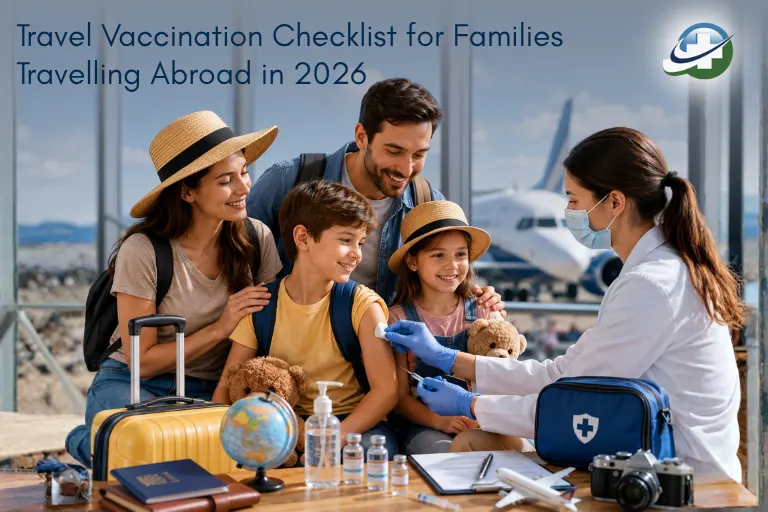
Planning a family holiday abroad is exciting, but health prep often gets left to the last minute. Whether you’re heading to Southeast Asia, Africa, the Caribbean, or Europe, getting your travel vaccination sorted early can protect your whole family from serious illnesses that are common in many parts of the world.
This guide covers everything families need to know before they travel in 2026, from the vaccines your kids and adults need to how far in advance you should book your appointment.
Why Travel Vaccination Matters More Than Ever in 2026
Vaccine-preventable diseases don’t care about your holiday plans. In 2026, global travel has rebounded fully post-pandemic, and health authorities are seeing a rise in cases of typhoid, hepatitis A, and yellow fever among travellers who weren’t properly vaccinated before departure.
Risks vary hugely by destination. A trip to rural India carries different health risks than a beach holiday in Spain. The right travel vaccination for your family depends on where you’re going, how long you’re staying, the type of activities you’re doing, the ages of your children, and your current vaccination history.
The good news is that most travel vaccines are quick, safe, and highly effective when taken at the right time.
How Far in Advance Should You Book a Travel Vaccination Appointment?
Most travel health experts recommend booking at least 6 to 8 weeks before you travel. Some vaccines need multiple doses given weeks apart, and others like rabies require a course of three injections over 21 to 28 days.
If you’re travelling in under two weeks, don’t panic. You can still get many vaccines at short notice, and a pharmacist or travel health clinic can advise on what’s still possible given your timeline.
At Burnham Health Pharmacy, we offer same-week appointments for travel vaccination consultations and can advise on what’s realistic based on your travel dates.
Core Travel Vaccinations for Families in 2026
Here are the most common vaccines recommended for families travelling abroad, grouped by who needs them and where they’re going.
Hepatitis A
Hepatitis A is one of the most commonly recommended travel vaccinations for families. It spreads through contaminated food and water, making it a risk in many popular destinations including India, Egypt, Thailand, Morocco, and parts of South America.
Two doses give long-term protection, often for up to 25 years. The second dose is given 6 to 12 months after the first. Children can receive the vaccine from age one.
Typhoid
Typhoid fever is a bacterial infection spread through contaminated food and water. It’s common in South Asia, sub-Saharan Africa, and Southeast Asia. The typhoid vaccine is available as a single injection or as oral capsules. The injection lasts around 3 years, while the oral course lasts about 1 year. Note that oral typhoid vaccines are not suitable for children under 6.
Yellow Fever
Yellow fever is a legal requirement for entry into some countries, including parts of sub-Saharan Africa and South America. You’ll receive a yellow fever certificate valid for life after vaccination. This vaccine must be given at least 10 days before travel to be accepted at borders.
Only approved yellow fever vaccination centres can administer this vaccine and issue valid certificates. Make sure you book through an approved provider.
Hepatitis B
Recommended for families travelling to areas with high rates of hepatitis B, including parts of Asia and Africa. It’s especially important if your trip involves activities with medical or blood exposure risk, or if children will be mixing closely with local populations for extended periods.
A standard course involves 3 injections. An accelerated schedule can complete the course in 3 weeks if needed.
Rabies
Pre-exposure rabies vaccination is worth considering for families travelling to rabies-endemic countries, especially those planning rural travel, adventure activities, or long-term stays. If a child is bitten by an animal in a country where rabies is present and they haven’t been vaccinated, they’ll need immediate medical treatment that may not be easily available locally.
Pre-exposure protection doesn’t eliminate the need for post-exposure treatment, but it buys you critical time.
Meningitis ACWY
This is recommended for travellers to the Meningitis Belt in sub-Saharan Africa (particularly during dry season), Saudi Arabia for Hajj or Umrah pilgrims, and some other destinations. In the UK, teenagers are offered this as part of their standard vaccination schedule, but families should check records and ensure it’s up to date before travel.
Japanese Encephalitis
Recommended for families spending extended time in rural areas of Asia, particularly during rice-growing and monsoon seasons when mosquito populations are highest. Two doses are given 28 days apart, so early planning is important.
Cholera
Available as an oral vaccine, cholera vaccination is recommended for travellers to areas with active outbreaks, aid workers, and those travelling to areas with very poor sanitation. The oral course consists of two doses taken 1 to 6 weeks apart.
Routine Vaccinations to Check Before You Travel
Before focussing on destination-specific vaccines, make sure your family is up to date on routine UK vaccinations. These include MMR (measles, mumps, rubella), diphtheria, tetanus, and polio (DTP), meningitis B and C, and flu (recommended for children under 2, elderly travellers, and those with underlying conditions).
Measles outbreaks in particular have been increasing across Europe and parts of Asia. Check your children’s MMR records well before departure.
Travel Vaccination by Destination: Quick Reference
Southeast Asia (Thailand, Vietnam, Indonesia, Philippines)
Recommended: Hepatitis A, typhoid, hepatitis B, Japanese encephalitis (rural/long stay), rabies (long stay or rural)
South Asia (India, Nepal, Sri Lanka, Bangladesh)
Recommended: Hepatitis A, typhoid, hepatitis B, rabies, Japanese encephalitis (rural Nepal)
Sub-Saharan Africa
Recommended: Hepatitis A, typhoid, yellow fever (depending on country), meningitis ACWY, rabies, hepatitis B
South and Central America
Recommended: Hepatitis A, typhoid, yellow fever (jungle/rural areas), hepatitis B
Middle East
Recommended: Hepatitis A, typhoid, meningitis ACWY (Saudi Arabia)
North Africa (Egypt, Morocco, Tunisia)
Recommended: Hepatitis A, typhoid, hepatitis B
Caribbean
Recommended: Hepatitis A, typhoid (depending on island and travel style)
Europe
Routine vaccinations should be up to date. Tick-borne encephalitis is relevant for outdoor activities in forested areas of Central and Eastern Europe.
Travel Vaccination for Children: What Parents Need to Know
Children’s immune systems are still developing, which makes them more vulnerable to some travel-related illnesses. Here are a few things to keep in mind.
Age restrictions apply to some vaccines. Typhoid oral capsules aren’t suitable under age 6. Hepatitis A can be given from age 1. Yellow fever is not recommended under 9 months and requires caution in infants under 12 months.
Some vaccines need a longer course. Allow enough time for multi-dose vaccines before your departure date.
NHS vs private vaccines. Some travel vaccines are available free on the NHS, including hepatitis A, typhoid, and cholera in some circumstances. Others like yellow fever, Japanese encephalitis, and rabies are usually paid for privately. A travel health consultation will clarify what’s covered.
Bring your child’s Red Book or vaccination records to any travel health consultation so the pharmacist or nurse can see what’s already been given and what gaps need filling.
Malaria Prevention: It’s Not a Vaccine (But It’s Just As Important)
Malaria cannot currently be prevented by a standard vaccine for adult travellers (though a malaria vaccine exists for children in high-risk regions under specific WHO programmes). Travellers to malaria-risk areas need antimalarial tablets prescribed by a health professional.
Common antimalarials include atovaquone/proguanil (Malarone), doxycycline, and mefloquine. The right one for your family depends on your destination, the ages of your children, any existing health conditions, and how long you’re travelling.
Start antimalarials before you travel and continue after you return. Specific timings depend on the medication.
In addition to tablets, use DEET-based insect repellent, sleep under mosquito nets, and wear long sleeves and trousers during dusk and dawn when mosquitoes are most active.
Book Your Travel Vaccination Consultation at Burnham Health Pharmacy
Getting your family travel-ready takes planning, and that’s where we come in. At Burnham Health Pharmacy, our trained travel health team will review your travel plans, check your vaccination history, and create a personalised vaccination plan for every member of your family.
We offer convenient appointment times, fast turnaround for last-minute travellers, and clear pricing with no hidden fees. We can also prescribe antimalarial tablets and advise on travel health kits.
Book your travel vaccination appointment with Burnham Health Pharmacy today and travel with confidence knowing your family is protected.
FAQ: Travel Vaccination for Families
What travel vaccinations do I need for a family holiday in 2026?
It depends on your destination. Common vaccines for families include hepatitis A, typhoid, and hepatitis B. Some destinations also require yellow fever or meningitis vaccinations. Book a travel health consultation at least 6 to 8 weeks before you depart to get destination-specific advice.
How early should I book a travel vaccination appointment?
At least 6 to 8 weeks before you travel. Some vaccines need two or three doses spaced weeks apart, and you need that time for your immune system to build protection before departure.
Which travel vaccinations are free on the NHS?
In the UK, hepatitis A, typhoid, and cholera vaccines may be available free on the NHS if they are deemed medically necessary for your destination. Yellow fever, Japanese encephalitis, and rabies are usually private. Check with your GP or a travel health pharmacy.
Are travel vaccinations safe for children?
Yes, travel vaccines are considered safe for children. Some have age restrictions, for example the oral typhoid vaccine is not suitable for under-6s, and yellow fever is not given to babies under 9 months. A pharmacist or nurse can advise on what’s appropriate for your child’s age.
Do I need travel vaccinations for Europe?
Most routine European travel does not require specific travel vaccinations if your routine jabs are up to date. However, if you’re hiking or camping in Central or Eastern Europe, tick-borne encephalitis vaccine is worth discussing. Check your MMR status, as measles outbreaks have occurred across Europe in recent years.
Can I get travel vaccinations last minute?
Yes, some vaccines can be given at short notice. Single-dose vaccines like hepatitis A and typhoid are effective quickly. Others like rabies and hepatitis B require multiple doses over weeks, so early planning always helps. Burnham Health Pharmacy offers short-notice appointments and can advise on what’s still possible before your trip.
Final Checklist Before You Travel
Before you fly, run through this checklist to make sure your family’s health prep is complete.
Book a travel health consultation 6 to 8 weeks before departure. Bring all vaccination records for every family member. Check destination requirements for yellow fever certificates. Start antimalarials before you depart if going to malaria-risk areas. Pack insect repellent with at least 50% DEET. Carry a basic travel health kit with rehydration sachets, antihistamines, and any prescribed medication. Check your travel insurance covers medical treatment and evacuation abroad.