
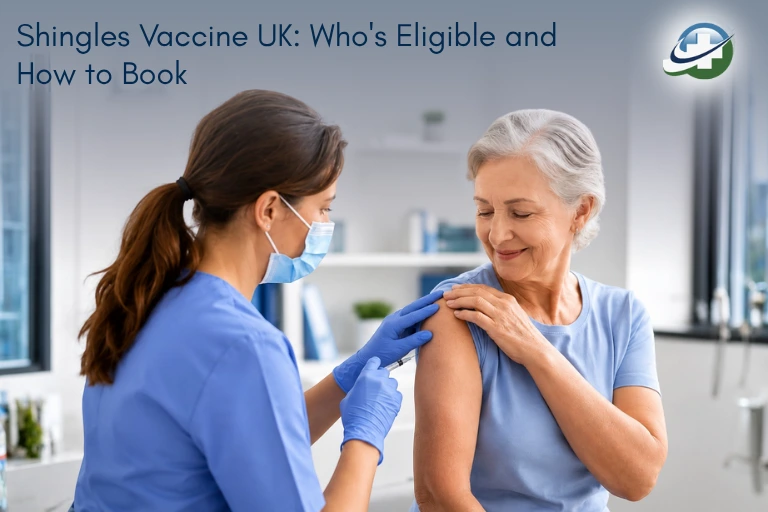
Shingles catches a lot of people off guard. One day you feel a bit of tingling on your skin, and a few days later you’re dealing with a painful rash that can last for weeks. If you’re over 50 or caring for someone who is, understanding the shingles vaccine UK eligibility rules can save a lot of confusion and a lot of discomfort.
This guide walks you through exactly who qualifies for shingles vaccination UK-wide under the NHS programme, what to expect from the process, and how to book your appointment without the runaround.
Table of Contents
- What Is Shingles and Why Vaccination Matters
- Shingles Vaccine UK Eligibility Explained
- NHS vs Private Shingles Vaccination UK: A Comparison
- Benefits of Getting Vaccinated
- Common Use Cases: Who Should Prioritise This
- How to Book Your Shingles Vaccine
- Best Practices Before and After Vaccination
- Common Mistakes to Avoid
- Frequently Asked Questions
- Final Thoughts and Next Steps
What Is Shingles and Why Vaccination Matters
Shingles happens when the chickenpox virus, which stays dormant in your body long after childhood, reactivates later in life. Nobody knows exactly why it wakes up in some people and not others, but age and a weakened immune system are the two biggest triggers.
Once it activates, shingles usually shows up as a painful, blistering rash on one side of the body, often the torso or face. If you’re trying to work out whether what you’re experiencing might actually be shingles, it’s worth knowing that the rash can sometimes appear a few days after the first symptoms, and in rare cases pain shows up without any rash at all. Along with the rash, people report burning pain, fatigue, headaches, and in some cases, complications affecting the eyes. The part that worries most people, though, is post-herpetic neuralgia. This is nerve pain that can stick around long after the rash has cleared, sometimes for months or even years.
That’s the real reason shingles vaccination UK programmes exist. It’s not just about avoiding a rash. It’s about avoiding the long tail of nerve pain that can seriously affect quality of life, especially in older adults.
Shingles Vaccine UK Eligibility Explained
Eligibility for the NHS shingles vaccine has changed a fair bit over the past couple of years, and it’s still being rolled out in phases. Here’s how it currently breaks down.
Adults turning 65 or 70: The programme currently covers people who turn 65 or 70 within the relevant eligibility window. If you were 65 before the newer rules came in, you become eligible at 70 instead. It sounds a bit confusing on paper, which is exactly why so many people end up unsure whether they qualify.
Adults aged 70 to 79: If you’re in this age bracket and haven’t had the vaccine yet, you’re still eligible. Coverage runs up until your 80th birthday, with a short window afterward to complete a second dose if needed.
Adults aged 18 and over with a severely weakened immune system: This includes people who’ve had certain transplants, are undergoing specific treatments, or are on medication that significantly suppresses immune function. There’s no upper age limit for this group.
The eligibility age is gradually being lowered over the coming years as part of a wider NHS rollout, so it’s worth checking your status periodically rather than assuming the rules haven’t shifted since you last looked. You can also check the latest official guidance on the NHS shingles vaccine page.
If you’re not sure where you stand, the safest move is a quick chat with your GP or a local pharmacist. At Burnham Health Pharmacy, our team can help you figure out where you fall in the eligibility timeline without any guesswork. You can find full details on our shingles vaccine service page as well.
NHS vs Private Shingles Vaccination UK: A Comparison
| Factor | NHS Shingles Vaccination | Private Shingles Vaccination |
| Eligibility | Age and health condition based | Open to most adults regardless of age criteria |
| Waiting time | Depends on invitation cycle | Usually booked at your convenience |
| Doses required | Two doses, spaced months apart | Two doses, spaced months apart |
| Who administers it | GP surgery or NHS-commissioned pharmacy | Registered private pharmacy or clinic |
| Best for | Those who meet NHS age or health criteria | Those who want earlier protection or don’t yet qualify under NHS rules |
Both routes use the same standard of care and qualified staff. The main difference comes down to timing and whether you currently meet NHS eligibility criteria.
Benefits of Getting Vaccinated
The case for getting vaccinated isn’t just theoretical. Here’s what it actually does for you.
Strong protection against the rash itself. The vaccine significantly lowers your chances of developing shingles in the first place.
Major reduction in nerve pain risk. Post-herpetic neuralgia is one of the most debilitating complications of shingles, and vaccination sharply reduces the odds of it happening.
Protection even if you’ve had shingles before. A common misconception is that once you’ve had shingles, you’re somehow immune. That’s not true. You can get it again, so vaccination still matters.
Fewer complications overall. Even in cases where a breakthrough infection occurs, vaccinated individuals tend to experience milder symptoms and faster recovery.
Long-lasting effect. The protection isn’t short-lived. It holds up well over the years following your full course.
Common Use Cases: Who Should Prioritise This
While the NHS eligibility rules set the baseline, certain groups benefit even more from staying on top of their shingles vaccination UK status.
People managing chronic conditions. Those living with diabetes, heart disease, or kidney disease tend to face more severe shingles outbreaks if infected, making prevention particularly valuable.
Carers of older or immunocompromised family members. While vaccination doesn’t stop transmission the way some vaccines do, being informed about shingles helps carers spot symptoms early and get treatment started quickly.
Anyone with a family history of severe shingles or PHN. If nerve pain complications ran in your family, that’s a reasonable prompt to have the conversation with your pharmacist sooner rather than later.
Adults nearing the eligibility threshold. If you’re a year or two away from qualifying, it’s worth putting a reminder in your calendar so you don’t miss your invitation window. It’s also worth browsing our other private vaccination services while you’re at it, since a lot of patients in this age group end up needing more than one jab around the same time, such as the pneumonia vaccine or annual flu vaccination.
How to Book Your Shingles Vaccine
Booking is more straightforward than most people expect.
Step 1: Check your eligibility.
Use the age and health criteria above, or simply ask your GP surgery or local pharmacist to confirm.
Step 2: Wait for your NHS invitation, or ask proactively.
Your GP surgery usually reaches out once you become eligible, typically by letter, text, or phone call. If you think you qualify and haven’t heard anything, don’t just wait around. Contact your surgery or a participating pharmacy directly.
Step 3: Book your appointment.
Many local pharmacies, including Burnham Health Pharmacy, offer straightforward booking for eligible patients. This can often be quicker than waiting on a GP appointment slot. You can go ahead and book your appointment online at a time that suits you.
Step 4: Attend your first dose, then schedule your second.
The vaccine is given in two doses, spaced a few months apart. Your pharmacist or GP will confirm the exact timing based on your age and health background.
If you’re unsure whether you qualify or just want a second opinion, walking into a pharmacy like Burnham Health Pharmacy and asking directly is often the fastest way to get a clear answer. You can also reach us through our contact page if you’d rather speak to someone first.
Best Practices Before and After Vaccination
A little preparation goes a long way with any vaccination, and shingles is no exception.
Before your appointment:
- Mention any allergies, especially previous reactions to vaccines
- Let the pharmacist or nurse know about any current medications
- If you’re unwell with a fever on the day, it’s usually better to reschedule
- Bring any relevant medical history, particularly if you have a weakened immune system
After your appointment:
- Expect mild soreness at the injection site for a day or two
- Some people experience tiredness or a mild headache, which usually passes quickly
- Keep track of your second dose date so you don’t miss the follow-up
- Contact your pharmacy or GP if you notice anything that feels unusually severe
Common Mistakes to Avoid
Assuming you’re automatically covered because of your age alone. Eligibility depends on specific birth dates and phased rollout timing, not just a round number age.
Skipping the second dose. One dose alone doesn’t give you full protection. The two-dose schedule matters.
Waiting indefinitely for an NHS invitation that never comes. Systems occasionally miss people. If you believe you’re eligible and haven’t heard anything, follow up yourself.
Thinking a past shingles infection rules out vaccination. As mentioned earlier, this isn’t the case. You can still benefit from the vaccine after having shingles.
Ignoring symptoms after vaccination because “it’s just a vaccine reaction.” Mild soreness is normal. Anything that feels significantly outside that should be checked out.
Frequently Asked Questions
- Who is eligible for the shingles vaccine UK-wide right now?
Eligibility currently centres on specific age brackets, generally people turning 65 or 70 depending on when they became eligible, adults aged 70 to 79 who haven’t yet had it, and anyone 18 or older with a severely weakened immune system. - How many doses of the shingles vaccine do I need?
Two doses are needed for full protection, given several months apart. Your pharmacist or GP will confirm the exact spacing based on your individual health profile. - Can I get the shingles vaccine if I’ve already had shingles?
Yes. Having had shingles before doesn’t make you immune to future outbreaks, so vaccination is still recommended. - Is the shingles vaccine available at a pharmacy or only through my GP?
Many pharmacies, including Burnham Health Pharmacy, are able to support patients with shingles vaccination UK services. It’s worth checking with your local pharmacy directly. - What side effects should I expect?
Most people experience mild, short-lived effects like soreness at the injection site, tiredness, or a slight headache. Serious reactions are rare. - I’m not sure if I qualify. What should I do?
The quickest way to find out is to speak directly with your GP surgery or a local pharmacist. They can check your eligibility against current NHS criteria in a few minutes.
Final Thoughts and Next Steps
Shingles isn’t something to leave to chance, especially once you’re in the age range where complications become more likely. The rules around shingles vaccine UK eligibility can feel a bit like a moving target given the phased rollout, but the core idea is simple: if you’re in an eligible age group or have a qualifying health condition, getting vaccinated is one of the most effective steps you can take to avoid a genuinely painful experience.
If you’re still unsure where you stand, don’t overthink it. Reach out to your GP surgery or visit a pharmacy that offers shingles vaccination UK services and get a straight answer. Burnham Health Pharmacy is here to help you check your eligibility and get booked in without unnecessary delays. Book your appointment today and get it sorted while it’s on your mind.