
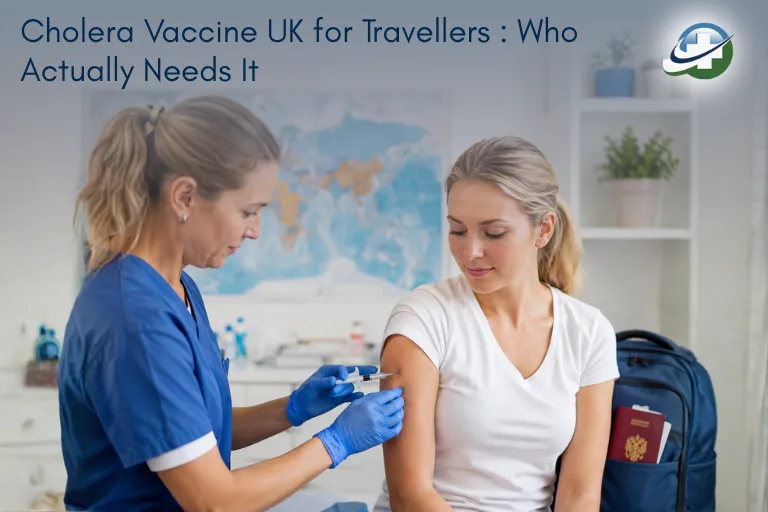
Cholera Vaccine UK is not needed for most UK holidaymakers. It is generally recommended for people travelling to regions where cholera outbreaks occur and where access to safe food, clean water, and good sanitation cannot be guaranteed, particularly if the trip involves rural travel, aid or relief work, or an extended stay. For a typical beach holiday or city break, it usually isn’t necessary. Below, we break down exactly who falls into the higher-risk group, how the vaccine works, and what else matters for protecting yourself against cholera before you travel.
What Is Cholera and How Is It Spread
Cholera is a bacterial infection that spreads through contaminated food and water, most commonly in areas with poor sanitation infrastructure. It causes sudden, severe diarrhoea and can lead to serious dehydration if untreated. The infection does not circulate in the UK, and cases in travellers are uncommon, but outbreaks continue to occur in specific regions, mainly parts of Africa, South Asia, and Southeast Asia, especially in areas affected by flooding, conflict, or breakdowns in clean water supply.
Most travellers who contract cholera pick it up through contaminated drinking water, ice, or food such as undercooked shellfish, not through person-to-person contact in the way a cold or flu spreads.
Who Actually Needs the Cholera Vaccine uk
There is no single answer that applies to every traveller. Whether cholera vaccination makes sense for you depends heavily on where you’re going, how long you’ll be there, and what kind of trip it is.
High-Risk Destinations and Travel Styles
You’re more likely to be advised to consider the cholera vaccine if your trip involves:
- Travel to a country with an active or recent cholera outbreak
- Extended stays in areas with limited access to safe drinking water or sanitation
- Aid work, disaster relief, or humanitarian projects in affected regions
- Rural travel off the typical tourist route, particularly during rainy or flood-prone seasons
- Staying with local communities rather than in tourist accommodation with controlled food and water standards
Travellers Who Are Usually Lower Risk
Most people fall outside the higher-risk group, including:
- Short holidays to well-established tourist resorts with reliable food and water standards
- City breaks and business trips with hotel-based accommodation
- Cruises and package holidays with controlled catering
- Travel to countries with no current cholera activity
If you’re unsure which category your trip falls into, that’s exactly what a travel health consultation is for. It’s a common question, and not one you need to work out alone from search results.
How the Cholera Vaccine Is Given
The cholera vaccine used in the UK is taken orally rather than by injection. It’s generally considered safe and well tolerated, with serious reactions being rare. Protection typically takes effect a short period after the course is completed, and full immunity doesn’t happen immediately, which is one of the main reasons early booking matters.
Because the exact schedule, number of doses, and timing before travel can vary depending on individual circumstances, we’d rather talk you through this properly during a consultation than give a generic answer here. You can check current details and book an appointment on our Travel Clinic Services page.
Cholera Vaccine vs Food and Water Hygiene Precautions
Vaccination is one layer of protection, not a replacement for good food and water hygiene. Even for travellers who are vaccinated, standard precautions still matter:
- Drinking bottled, boiled, or reliably treated water, including when brushing your teeth
- Avoiding ice unless you know it’s made from safe water
- Choosing thoroughly cooked food and avoiding raw or undercooked seafood
- Washing hands regularly, particularly before eating and after using the bathroom
For travellers heading to genuinely high-risk areas, vaccination combined with careful hygiene gives far better protection than either approach alone.
When to Book Before You Travel
Because the cholera vaccine needs time to take full effect, it’s worth arranging your travel health appointment well ahead of departure, ideally as soon as you’ve booked your trip and know your itinerary. If your travel dates are close, it’s still worth getting in touch. Even later appointments can offer meaningful protection, and a pharmacist can advise on the most sensible options for your remaining timeframe.
FAQs
Is the cholera vaccine required for entry to any country?
No country currently requires proof of cholera vaccination for entry. It’s a recommendation based on individual risk, not a legal requirement, unlike some other travel vaccines.
How long does cholera vaccine protection last?
Protection generally lasts a few years, though this can vary by individual and destination risk. If you travel to high-risk areas repeatedly, a booster may be worth discussing at your appointment.
Can I get the cholera vaccine at the same time as other travel vaccines?
Often, yes, though this depends on which other vaccines you need and your personal medical history. This is exactly the kind of detail a pharmacist will confirm with you directly rather than something to assume in advance.
Is the cholera vaccine suitable for children?
It can be recommended for children in some cases, depending on their age and the specific travel plans. This is assessed individually rather than applied as a blanket rule.
Not Sure If You Need It? Let’s Work It Out Together
Cholera vaccination isn’t a default addition to every travel vaccine list, it’s a decision based on your actual itinerary. Rather than guessing from a checklist, book a travel health consultation with our team in Slough. We’ll look at your destination, travel style, and timeline, and tell you honestly whether the cholera vaccine applies to your trip, alongside anything else worth considering before you fly.
Book your travel health consultation or explore our full Travel Clinic Services.