
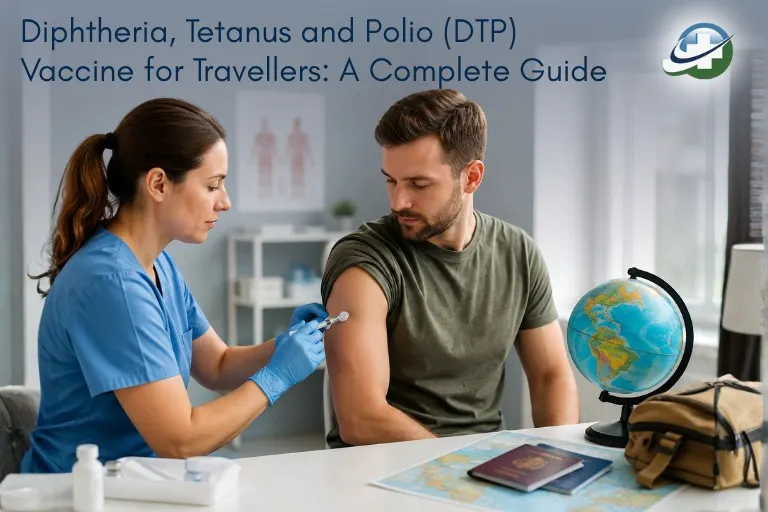
The DTP (Diphtheria, Tetanus & Polio) vaccine for travellers is a single combined injection that protects against three serious infections at once: diphtheria, tetanus and polio. Most adults in the UK had this vaccine as children through the NHS routine immunisation schedule, but that protection fades over time. If your last dose was more than 10 years ago and you’re heading somewhere these diseases are still present, a booster is generally recommended before you go. This guide covers who needs one, when, and what actually happens at the appointment.
What the DTP Vaccine Protects Against
DTP is a three-in-one vaccine, sometimes called Td/IPV in the UK, meaning tetanus, diphtheria and inactivated polio vaccine. It’s given as a single injection and contains no live organisms, so it cannot cause the diseases it protects against.
Diphtheria
Diphtheria is a bacterial infection that attacks the throat and airways and can spread from person to person through close contact or respiratory droplets. It’s rare in the UK but still circulates in parts of Asia, Africa and Eastern Europe, and outbreaks have occurred in countries that are popular with travellers.
Tetanus
Tetanus isn’t spread person to person. It enters through cuts, wounds or breaks in the skin, particularly ones contaminated by soil or dirt. It causes painful muscle stiffness and spasms and can be life-threatening without prompt treatment, which is one reason it matters for travellers heading somewhere medical care might not be immediately available.
Polio
Polio is a viral infection spread mainly through contaminated food or water, or close contact with an infected person. Most people who catch it have no symptoms, but a small proportion develop paralysis that can be permanent. It’s now rare worldwide, but a handful of countries still report cases, and some destinations ask for proof of a recent booster before you can enter.
Do You Already Have Cover From Childhood Vaccination
If you completed the full NHS childhood schedule, which most UK adults did, you already have a solid base of protection. The issue is that immunity from those childhood doses wanes over the years. As a general rule, if it’s been 10 years or more since your last dose, that protection can no longer be relied on for travel to higher-risk regions.
How to Check Your Immunisation History
Not everyone remembers exactly when they last had a booster, and that’s normal. Your GP records or the NHS App may show your vaccination history. If you can’t find a clear record, a travel health consultation can help you work out a sensible approach, and having the booster again causes no harm even if you turn out to have been covered already. Our vaccines and doses guide also breaks down dosing schedules across our full travel vaccine range, which can help you see how DTP fits alongside anything else you might need.
When Travellers Need a Booster
A booster is generally worth considering if any of the following apply:
- It’s been 10 years or more since your last DTP, Td/IPV, or tetanus-containing vaccine.
- You’re travelling to a region where diphtheria or polio still circulates, including parts of South and Southeast Asia, sub-Saharan Africa, or Eastern Europe.
- You’ll be somewhere with limited access to medical care if you’re injured.
- You’re an aid worker, healthcare worker, or long-stay traveller with more sustained exposure risk.
- You’re unsure of your vaccination history altogether.
Regions Where Polio Boosters Are Recommended
Polio boosters for travel are most relevant for a small number of countries where transmission is still occurring or where recent outbreaks have been reported, along with some neighbouring countries. Because this list changes, it’s worth checking current country-specific guidance from NaTHNaC or your travel clinic close to your departure date rather than relying on general knowledge from a previous trip.
What Happens During the Appointment
The DTP booster is given as a single injection into the upper arm, and the appointment itself is quick, usually a matter of minutes once your vaccine history has been discussed. As part of our Travel Clinic Services, it can be given at the same time as other travel vaccines, such as hepatitis A or typhoid, so it’s often bundled into one visit rather than needing a separate trip. Full protection typically builds over two to four weeks, so it’s worth having it done well ahead of departure rather than the day before, even though it can technically be given right up to the point of travel if needed.
Side Effects and Safety
Side effects from the DTP booster are usually mild and short-lived. The most common are soreness, redness or mild swelling at the injection site, and occasionally a low-grade temperature for a day or so afterward. Because the vaccine doesn’t contain live organisms, it’s considered suitable for most adults and children who need a booster, though anyone with a specific medical history or previous reaction should discuss this with the clinician beforehand.
Frequently Asked Questions
Is DTP the same as the 6-in-1 baby vaccine? No. The 6-in-1 given to infants includes diphtheria, tetanus and polio alongside three other components. The adult travel booster is a simpler combined vaccine covering just diphtheria, tetanus and polio, sometimes referred to as Td/IPV.
Do I need a polio booster to travel? Only if you’re heading to a country where polio transmission or a recent outbreak has been reported, or where entry requirements ask for it. For most destinations, the standard 10-year DTP booster guidance applies rather than a polio-specific requirement.
How do I know if I’m up to date on tetanus? Check your GP records or the NHS App first. If you can’t confirm the date of your last dose, a travel health appointment can review what’s known and advise on a booster, which is safe to have even if you may already be covered.
Is DTP available on the NHS or only privately for travel? Tetanus boosters following an injury are typically handled through the NHS. For travel-specific boosters given ahead of a trip, this is usually arranged through a private travel clinic or pharmacy travel service, alongside other travel vaccinations.
Can I have DTP alongside other travel vaccines in one visit? Yes. It’s commonly given in the same appointment as vaccines like hepatitis A or typhoid, which can save you a return visit before your trip. If you’re planning a family trip, our travel vaccination checklist for families is a useful starting point for mapping out what everyone in your group might need.
Book Your Travel Health Check
If it’s been a while since your last booster, or you’re simply not sure where you stand, the easiest next step is a travel health consultation. Our team can review your vaccination history, talk through your specific destination, and administer any booster you need alongside your other travel vaccines in a single visit. Book your travel vaccination appointment with Burnham Health Pharmacy today.