
Planning a tropical holiday is exciting. But if your destination includes Southeast Asia, the Caribbean, South America, or parts of Africa, there is one health risk you absolutely need to prepare for before you fly: dengue fever.
Dengue is found in more than 100 countries, with about half the world’s population now at risk. Cases have been reported in UK travellers who visited South and Southeast Asia, South and Central America, Africa, and the Caribbean. Unlike malaria, dengue mosquitoes bite during the day, which catches many travellers off guard.
This guide covers everything UK travellers need to know about dengue fever prevention, from the clothing you should pack to the new Qdenga vaccine now available in the UK.
What Is Dengue Fever?
Dengue is a viral infection that spreads from day-biting mosquitoes to humans. It is more common in tropical and subtropical countries, mostly in urban and semi-urban areas, and is endemic in more than 100 countries worldwide, including in Africa, the Americas, the Eastern Mediterranean, Southeast Asia, and the Western Pacific region.
Symptoms typically appear four to ten days after being bitten by an infected mosquito. Common signs include:
- High fever
- Severe headache
- Muscle and joint pain (sometimes called “breakbone fever” because of how intense it feels)
- Nausea and vomiting
- A rash
Most infections are self-limiting, with a rapid recovery three to four days after the rash appears. However, a small number of people develop severe dengue, which can be life-threatening without hospital treatment.
One thing that makes dengue particularly risky for UK travellers is that there is no specific drug treatment for dengue. Management is supportive, aiming to alleviate symptoms and prevent complications. That makes prevention your most important weapon.
Why UK Travellers Are at Higher Risk
Most UK residents have never been exposed to dengue virus before, which means they have no natural immunity. If you have not been exposed to dengue before, you are at higher risk of developing severe symptoms, and the local mosquitoes will see you as an easy target.
There is also the issue of a second infection. Secondary infection with a different serotype confers an increased risk of severe dengue, whereby partly primed but ineffective responses drive disease enhancement with downstream vascular leakage, bleeding, and organ impairment. So if you have had dengue before on a previous trip, your risk of serious illness on a second infection is higher, not lower.
The threat is also growing. The number of dengue cases worldwide has markedly increased in the past few decades, with large outbreaks reported globally.
Top Dengue Fever Prevention Tips for UK Travellers
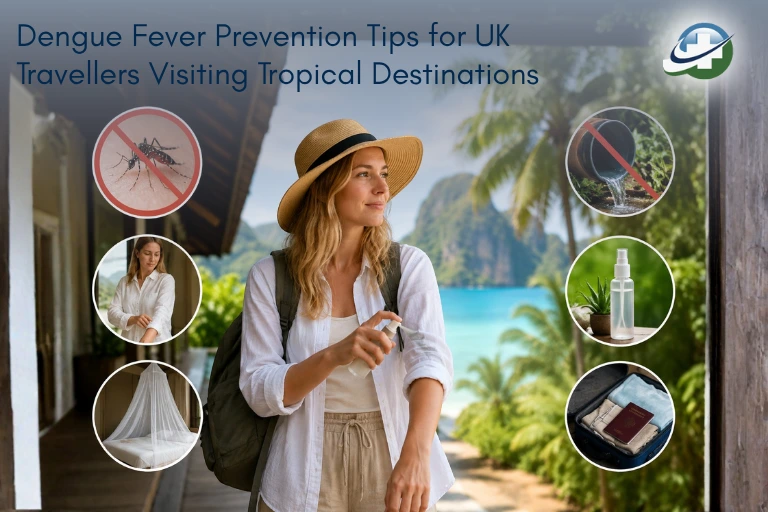
1. Use the Right Insect Repellent
This is your single most important defence. 50% DEET (N,N-diethyl-m-toluamide) based insect repellents are the most effective repellents currently available and can be used if you are pregnant or breastfeeding, and for children from two months of age.
Apply repellent to all exposed skin throughout the day, not just at sunrise and sunset. Insect repellent should be applied after sunscreen and regularly reapplied after any activities, including swimming.
If DEET does not suit you, alternatives include repellents containing Icaridin (Picaridin) or Eucalyptus citriodora oil. Speak to a pharmacist before you travel about which product is right for you and your family.
2. Cover Up During Daytime Hours
Wear long-sleeved shirts and long trousers, especially during the day. The Aedes mosquito that carries dengue is a daytime biter, with peak activity in the early morning and late afternoon.
Light-coloured, loose-fitting clothing works best in the heat. Some travellers also choose to treat their clothing with permethrin, an insecticide that repels and kills mosquitoes on contact.
3. Choose Accommodation Carefully
Stay in accommodations with air conditioning or insect screens. Use mosquito nets if sleeping in open or unscreened areas.
If you are staying in budget guesthouses or open-air bungalows, bring your own travel mosquito net as a backup. An insecticide-treated net offers protection even if the windows have gaps.
4. Avoid Areas With Standing Water
Those living in or visiting endemic areas should remove rubbish or water containers close to their accommodation where possible, as they can be breeding sites for mosquitoes.
Aedes mosquitoes breed in small amounts of still water such as flower pots, tyres, blocked drains, and water tanks. If you are staying somewhere longer term, such as on a work trip or volunteering placement, keep your surroundings as clear of stagnant water as possible.
5. Be Extra Vigilant Around Dawn and Dusk
Particular vigilance with bite precautions should be taken around dawn and dusk. Many travellers think they only need to worry about mosquitoes at night (which is more relevant for malaria), but dengue mosquitoes are most aggressive during these two daily windows. Ensure you are covered up and repellent is freshly applied during these peak periods.
6. Know the Symptoms Before You Go
Understanding dengue symptoms means you can act quickly if something goes wrong abroad. If you have symptoms such as high fever and severe headache or a rash within two weeks of your return from a country with a risk of dengue, get urgent medical help and remember to tell your GP or nurse about every country you visited.
Do not self-medicate with ibuprofen or aspirin if you suspect dengue, as these can worsen bleeding. Paracetamol is the safer option for fever and pain relief.
The Dengue Vaccine: What UK Travellers Need to Know
There is now a licensed dengue vaccine available in the UK called Qdenga (TAK-003). As of November 2025, Qdenga is authorized in the United Kingdom and 41 other countries.
Qdenga conferred 61.2% protection against virologically confirmed dengue and 84.1% protection against dengue infection requiring hospitalisation in follow-up studies. That is significant protection against serious illness.
However, eligibility matters. The JCVI has recommended that the Qdenga vaccine could be offered to individuals aged 4 years and older who have had dengue infection in the past and are planning to travel to areas where there is a risk of dengue infection, or areas with an ongoing outbreak.
At the current time JCVI has stated that Qdenga vaccination could not be advised for those with no previous dengue infection, as the information from clinical trials to date is insufficient to make a recommendation for these individuals.
Qdenga is given as a two-dose course, three months apart, so you need to plan well ahead. Dengue is one of the leading causes of hospitalisation among UK travellers returning from Southeast Asia and the Caribbean, and a single hospital admission abroad will far exceed the cost of the vaccine course.
At Burnham Health Pharmacy, our trained travel health team can assess your suitability for the Qdenga vaccine and provide a full travel health consultation tailored to your destination, itinerary, and medical history.
High-Risk Destinations for UK Travellers
If you are planning any of the following trips, dengue fever prevention should be near the top of your pre-travel checklist:
Southeast Asia: Thailand, Vietnam, Indonesia, Malaysia, Philippines, Sri Lanka
South Asia: India, Bangladesh, Pakistan, Nepal
Caribbean: Jamaica, Dominican Republic, Cuba, Barbados, Trinidad
South and Central America: Brazil, Colombia, Mexico, Peru, Costa Rica
Africa: Kenya, Tanzania, Nigeria, Ghana, Mozambique
Aedes mosquitoes are also found in Europe, with several countries reporting locally acquired dengue cases, including Croatia, France, Italy, and Spain. While the risk in Europe is much lower than in the tropics, it is worth noting that dengue is no longer exclusive to long-haul destinations.
What to Do If You Get Dengue Abroad
If you develop a high fever, severe headache, or body rash during your trip or within two weeks of returning to the UK, seek medical attention straight away. Tell the doctor or nurse exactly which countries you visited and when.
Patients may need to be admitted to hospital, with careful management of fever, fluid balance, electrolytes, and blood clotting. Most people with dengue make a full recovery, but it is important not to delay getting seen.
When you get back to the UK, tell your GP about your symptoms and travel history even if you feel better. Some dengue complications can appear after the initial fever drops.
Travel Health Checklist Before You Fly
Use this quick checklist before every tropical trip:
- Book a travel health appointment at least 6 to 8 weeks before departure
- Ask about the Qdenga dengue vaccine if you have had dengue before
- Pack a 50% DEET repellent (and reapply throughout the day)
- Bring long-sleeved tops and light trousers for daytime coverage
- Check your accommodation has screens or air conditioning
- Pack a travel mosquito net as backup
- Know the dengue symptoms and keep paracetamol on hand
- Make sure your travel insurance covers tropical infections
Book a Travel Health Consultation at Burnham Health Pharmacy
Preparing properly before a tropical trip is the best thing you can do for your health. Dengue fever prevention is straightforward when you have the right advice and products in place.
At Burnham Health Pharmacy, our experienced pharmacists offer personalised travel health consultations covering dengue prevention, vaccine eligibility for Qdenga, malaria tablets, and all the other travel vaccinations recommended for your destination. We will help you understand exactly what protection you need based on where you are going, how long you are staying, and your health history.
Book your travel health appointment at Burnham Health Pharmacy today and travel with confidence.
Frequently Asked Questions: Dengue Fever for UK Travellers
Can I catch dengue fever in Europe?
Yes, though the risk is much lower than in tropical regions. Aedes mosquitoes are found in Europe, with several countries including Croatia, France, Italy, and Spain having reported locally acquired dengue cases. If you are travelling to southern Europe in summer, basic bite prevention is still sensible.
Is there a dengue vaccine available on the NHS in the UK?
Dengue fever vaccines are not provided free of charge on the NHS for travellers. They are a private service. You can access the Qdenga vaccine through private travel clinics and pharmacies such as Burnham Health Pharmacy.
Do anti-malaria tablets protect against dengue?
No. Anti-malarial tablets provide no protection against dengue. They are caused by different pathogens and carried by different mosquitoes. If you are travelling somewhere where both diseases are present, you need separate prevention strategies for each.
When should I start using mosquito repellent in a dengue-risk country?
From the moment you arrive. Dengue is a risk all year round in tropical countries. Apply repellent every morning before going outside and reapply after swimming or sweating. Do not wait until evening.
Can children travel safely to dengue-risk areas?
Yes, with the right precautions. 50% DEET-based repellents can be used for children from two months of age. Use insecticide-treated mosquito nets for young children and dress them in long sleeves and trousers during the day. Speak to a pharmacist about age-appropriate products before you travel.
What should I do if I feel ill after returning from a tropical trip?
See a doctor straight away and tell them everywhere you visited. Dengue symptoms can appear up to 14 days after a bite. Do not assume it is just jet lag.
How far in advance should I book a travel health appointment?
Aim for at least 6 to 8 weeks before your departure date. If you need the Qdenga vaccine, you will need to start at least 3 months before travel to complete the two-dose course.
Is dengue worse the second time you catch it?
Often, yes. Secondary infection with a different serotype confers an increased risk of severe dengue. If you have had dengue on a previous trip, it is especially important to take prevention seriously and discuss the Qdenga vaccine with a travel health specialist.