
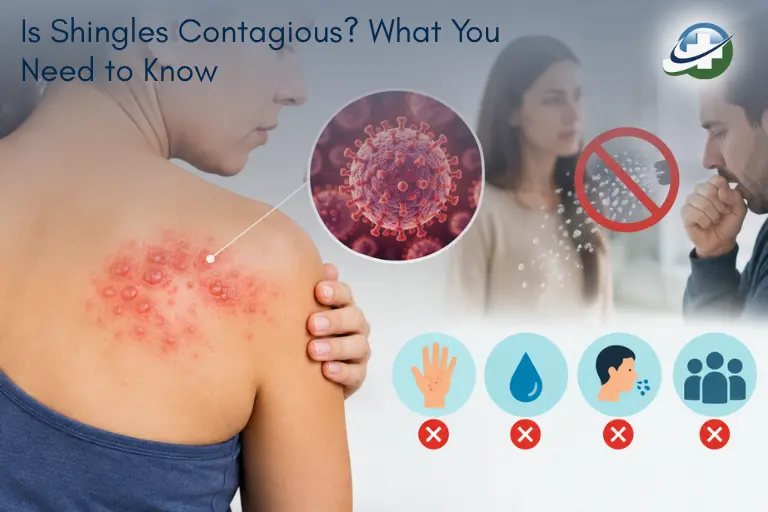
Is Shingles contagion itself isn’t spread from person to person, but the virus behind it can be. Someone with active shingles blisters can pass the chickenpox virus to a person who has never had chickenpox, and that person would develop chickenpox, not shingles.
If you or someone close to you has just been diagnosed, that is the short version. The rest of this guide covers how it works, how long the risk lasts, and what you can do to keep other people safe.
Can you catch Is Shingles Contagious from someone?
No. You can’t catch shingles from another person. It happens when a virus already inside your body wakes up.
Shingles and chickenpox: the link
Shingles and chickenpox are caused by the same virus, called varicella-zoster. Chickenpox is the first infection, usually in childhood. Shingles can come years later, when the virus reactivates.
What is actually contagious?
After chickenpox clears, the virus stays dormant in your nerves, sometimes for decades. If it reactivates, it travels along a nerve and causes a blistering outbreak on the skin, usually on one side of the body.
What can spread is the virus in the blister fluid. If someone who has never had chickenpox (or the chickenpox vaccine) touches that fluid, they can catch chickenpox from you. They can’t catch shingles.
How shingles actually spread (and who’s at risk)
How the virus spreads
The virus spreads through direct contact with fluid from open or weeping blisters. That can happen through skin contact, or by handling things that have touched the affected area, like towels, bedding or clothing.
You can’t pass it on before the blisters appear, and it doesn’t spread through coughing or sneezing the way a cold does. Blisters that are covered carry a much lower risk.
Who can catch chickenpox from someone with shingles?
- People who have never had chickenpox or the chickenpox vaccine
- Pregnant women who haven’t had chickenpox
- Newborn babies
- People with a weakened immune system
For these groups, chickenpox can be more serious, so extra care is worth it.
Shingles risk factors: who is more likely to get it
- Adults aged 50 and over
- People with a weakened immune system
- People with long-term conditions such as diabetes, heart disease or kidney disease
- Anyone who has had chickenpox, which is most adults
How long are you contagious for?
When the contagious period starts
You become contagious when the blisters appear. Before that, including the days of tingling or burning on the skin, the risk of spreading the virus is very low.
When the contagious period ends
You stay contagious until every blister has dried and formed a scab. For most people that takes around 7 to 10 days. New blisters can keep appearing for up to a week, so the clock runs from when the blisters first show up, not from the first tingling.
Why early treatment matters
Getting checked early helps you and the people around you. Treatment started within about 72 hours of the blisters appearing can reduce how severe the illness is and how long the discomfort lasts. Our guide to treating and preventing shingles explains what to expect.
Steps to protect people around you
You don’t need to hide away. A few simple habits keep the risk low.
Cover and care for the blisters.
- Keep the blisters covered with loose clothing or a light, non-stick dressing.
- Avoid touching or scratching them.
- Keep the area clean and dry.
Everyday hygiene habits
- Wash your hands often, especially before touching food or other people.
- Wash your hands straight away if you touch the blisters.
- Don’t share towels, bedding or clothing that has touched the affected skin.
Who to keep away from
Until your blisters have crusted over, avoid close contact with pregnant women who haven’t had chickenpox, newborn babies, and anyone with a weakened immune system.
Work, school and everyday life
If the blisters are covered, many people can carry on as normal. If they are weeping or you can’t cover them, it’s safest to stay away from others until they have dried. If you work around babies, patients or vulnerable people, check with your employer or a pharmacist first.
Can the shingles vaccine lower your risk?
The shingles vaccine doesn’t treat an active outbreak, but it lowers your chance of getting shingles at all. If you still get it, the vaccine can also reduce how severe it is and the long-term nerve problems that can follow.
Who can have it?
Our shingles vaccine service is recommended for adults aged 50 and over and for people with conditions like diabetes, heart disease or kidney disease. It can also be given after you’ve had shingles to help stop it from coming back. If you have a weakened immune system, speak to a doctor first. NHS eligibility depends on age and health, and our guide to the shingles vaccine in the UK explains who qualifies and how to book.
How many doses
The course is 2 doses, with the second given 2 to 6 months after the first. Your pharmacist will confirm the right timing for you.
When to see a pharmacist
You don’t have to wait for a GP slot. See a pharmacist as soon as you notice:
- Burning, tingling or shooting sensations on one side of your body, followed by blisters
- Blisters that are itchy, weeping, or still appearing
- Blisters, and you are over 50, pregnant, or have a weakened immune system
- Symptoms that are moderate or severe
Our pharmacists can assess you and, where appropriate, offer prescription treatment for adults aged 18 and over through our NHS shingles service. If the blisters are near your eye, or you feel very unwell, seek urgent medical help.
FAQs
Can you get shingles from someone with chickenpox?
No. Shingles comes from the virus already in your own body. Someone with chickenpox can’t give you shingles, though if you haven’t had chickenpox yourself, you could catch chickenpox from them.
Is shingles contagious before the blisters appear?
No. You can only pass the virus on once blisters have appeared, and the risk ends when they have crusted over.
Can you spread shingles by touching someone?
Only if the other person touches the fluid from your blisters. Touching healthy skin, or blisters that are covered, carries a very low risk.
Can I be around children if I have shingles?
It’s best to keep your distance from young children who haven’t had chickenpox and from babies until your blisters have scabbed. Children who have had chickenpox or the vaccine are at much lower risk. Our guide to the chickenpox vaccine for parents may help.
Can you get shingles more than once?
Yes. It’s uncommon, but it can happen. The shingles vaccine can still be given after you’ve recovered, and it helps reduce the chance of it coming back.
How many doses of the shingles vaccine are needed?
The course is 2 doses, with the second given 2 to 6 months after the first.
Think you have shingles? Talk to our pharmacists today.
The sooner you’re seen, the sooner you can get comfortable and the lower the risk to the people around you. Whether you need symptoms checked or want to protect yourself with the vaccine, the team at Burnham Health Pharmacy is here to help.
- Blisters or discomfort? Visit our NHS shingles service page to see how we can help.
- Want to lower your risk? Learn about our shingles vaccine.
- Ready to go? Book your appointment online, contact the team