
Table of Contents
- What Is a Medical Weight Loss Programme?
- Signs You May Benefit From One
- Who Is a Medical Weight Loss Programme For?
- Self-Managed vs Medically Supervised Weight Loss: What’s the Difference?
- Benefits of Medically Supervised Weight Loss
- Common Use Cases
- Best Practices When Joining a Weight Loss Clinic
- Common Mistakes to Avoid
- FAQ
- Ready to Take the Next Step?
What Is a Medical Weight Loss Programme?
A medical weight loss programme is a structured, clinician-supported approach to losing weight that goes beyond generic diet plans and fitness apps. Instead of trial and error, you work with trained healthcare professionals who assess your individual health profile, understand what’s been holding you back, and build a plan that actually fits your body and lifestyle.
This isn’t about quick fixes. Medically supervised weight loss focuses on sustainable outcomes, addressing underlying factors like metabolic health, hormonal balance, and behavioural habits alongside physical progress. It combines clinical assessment, nutritional guidance, lifestyle coaching, and where appropriate, approved treatment options prescribed under proper medical oversight.
At Burnham Health Pharmacy, the approach is rooted in exactly that: personalised support, not a one-size-fits-all template. If you’ve been struggling to make progress despite trying on your own, a programme like this could be the turning point.
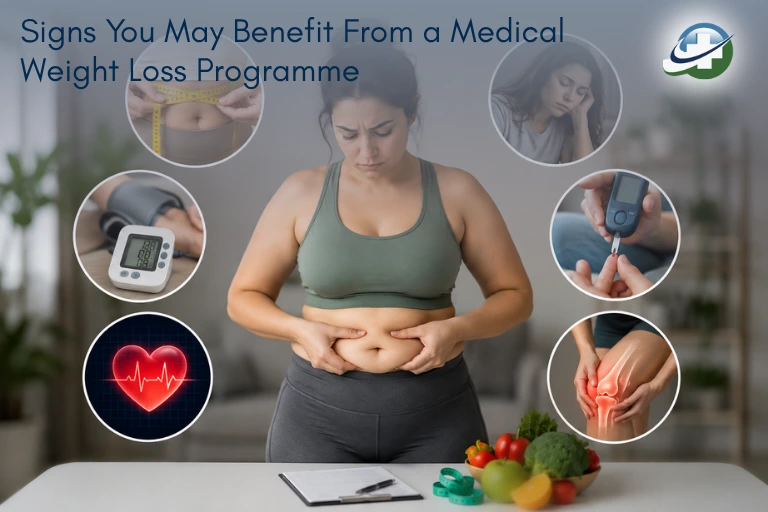
Signs You May Benefit From a Medical Weight Loss Programme
Knowing when to consider professional weight loss support isn’t always obvious. Here are the clearest signs that a medical weight loss programme could genuinely help you.
1. You’ve Tried Multiple Diets Without Lasting Results
If you’ve been through calorie counting, low-carb plans, intermittent fasting, and everything in between only to regain the weight after a few months, it’s a strong signal that the standard self-managed approach isn’t enough for your body. A clinical programme helps identify why you’re not responding the way you’d expect and adjusts accordingly.
2. Your BMI Falls Into the Overweight or Obese Range
A BMI over 25 (overweight) or over 30 (obese) is one of the most common triggers for seeking weight loss clinic support. At this point, the health risks tied to excess weight, including cardiovascular disease, type 2 diabetes, and joint problems, become more significant. A structured medical weight loss programme addresses these risks directly, not just the number on the scale.
3. Weight Is Affecting Your Health
If your GP has flagged conditions linked to your weight, such as high blood pressure, elevated cholesterol, pre-diabetes, or sleep apnoea, this is a clear sign that medically supervised weight loss isn’t optional, it’s a health priority. Losing even 5 to 10 percent of body weight can make a measurable difference to these conditions.
4. You Have a History of Emotional or Stress-Related Eating
Weight gain driven by emotional triggers, stress, boredom, or anxiety often won’t respond well to a simple calorie restriction plan. A medical weight loss programme incorporates behavioural and lifestyle support to help you understand and address those patterns rather than fighting them alone.
5. You Feel Stuck Despite Exercising Regularly
If you’re already fairly active but the weight isn’t shifting, there may be something else going on, whether that’s hormonal imbalances, medication side effects, or dietary habits that are subtly counterproductive. A clinical assessment can uncover factors that a gym routine simply can’t fix.
6. Previous Weight Loss Has Been Followed by Rapid Regain
Also known as the “yo-yo” pattern, repeated cycles of losing and regaining weight are both physically and psychologically draining. They often signal that the methods used weren’t sustainable. A proper medical weight loss programme focuses on habit-building and long-term maintenance, not just the initial loss.
7. You’re Considering Weight Loss Treatments But Want Proper Guidance
If you’ve heard about prescription-only weight management treatments and are curious whether they might be suitable, that’s exactly the kind of question that needs a clinical conversation, not a Google search. A registered healthcare provider can assess your eligibility, explain the options honestly, and supervise your progress safely. You can learn more about what to expect at your first weight loss consultation before booking.
8. Your Confidence and Mental Wellbeing Are Affected
Weight can have a real impact on how you feel about yourself day to day. If your self-esteem, social life, or mental health are being affected by how you feel in your body, that’s a legitimate and important reason to seek professional support. A holistic programme addresses both the physical and emotional dimensions.
Who Is a Medical Weight Loss Programme For?
A medical weight loss programme isn’t reserved for people with extreme obesity. It’s suitable for a much wider group, including:
- Adults with a BMI of 25 or above who have not achieved results through self-managed efforts
- People with weight-related health conditions that need careful management alongside fat loss
- Individuals who have experienced repeated unsuccessful weight loss attempts
- Those who want to lose weight safely under professional oversight rather than going it alone
- People who want a personalised, evidence-informed plan rather than a generic approach
If you’re unsure whether you fit the criteria, the most straightforward thing to do is book an initial consultation. A trained clinician can tell you quickly whether a programme is the right fit for where you are now.
Self-Managed vs Medically Supervised Weight Loss: What’s the Difference?
| Feature | Self-Managed | Medical Weight Loss Programme |
| Personalisation | Generic plans | Tailored to your health profile |
| Clinical assessment | None | Full health review included |
| Accountability | Self-directed | Regular professional check-ins |
| Addressing root causes | Rarely | Yes, including metabolic and behavioural factors |
| Access to clinical treatments | No | Yes, if clinically appropriate |
| Long-term support | Limited | Ongoing guidance and progress tracking |
| Nutritional guidance | Generic | Expert nutritionist input |
| Safety monitoring | None | Supervised throughout |
The most important distinction is that medically supervised weight loss doesn’t just hand you a meal plan. It builds a complete support structure around you.
Benefits of a Medical Weight Loss Programme
Here’s what you genuinely gain from taking the clinical route rather than going it alone:
Personalised planning. No two people’s bodies or histories are identical. A clinical programme starts with understanding yours, not recycling a template.
Accountability that actually works. Regular check-ins with healthcare professionals keep you on track without the guilt-tripping of social media groups or fitness influencers.
Holistic health improvement. Beyond the scale, participants often see improvements in blood pressure, energy levels, sleep quality, and joint comfort as weight reduces.
Safety. Weight loss that happens too quickly or through unsupervised restriction can carry real risks. Medical oversight means those risks are managed properly.
Behaviour change, not just weight change. The habits built during a programme are designed to last far beyond the programme itself, which is what separates genuine progress from the yo-yo cycle.
Access to approved clinical options. Where appropriate and eligible, you can access medically approved weight management treatments under proper supervision, something you simply cannot do safely without clinical involvement.
Common Use Cases
Medical weight loss programmes are particularly well-suited to specific situations. Here are the most common ones:
Weight-related health management. People managing or trying to prevent conditions like type 2 diabetes, hypertension, or high cholesterol often find that structured weight loss is the most impactful single intervention they can make.
Post-pregnancy weight management. Many women struggle to return to a healthy weight after pregnancy, and a supervised programme can provide the safe, evidence-based support that generic fitness content cannot.
Weight management for those with limited mobility. For people whose joint pain or mobility restrictions make exercise difficult, a clinical team can design an approach that doesn’t rely on high-impact activity.
Breaking a long-term plateau. If your weight has been essentially static for years despite effort, clinical investigation can often identify the reason and help you move forward.
Preparing for a health goal. Whether you’re aiming to reduce surgical risk, improve fertility, or increase your energy for a major life event, targeted weight management under clinical oversight can be the most direct route there.
Best Practices When Starting a Medical Weight Loss Programme
Getting the most from a medically supervised weight loss programme comes down to a few core habits:
Be honest in your consultation. The more accurate information you give your clinical team about your eating habits, activity levels, sleep, stress, and medical history, the better they can tailor your plan.
Set realistic expectations. Healthy, sustainable weight loss typically happens at a rate of 0.5 to 1kg per week. Faster isn’t always better and can actually undermine long-term success.
Engage with the lifestyle guidance, not just the clinical elements. Nutritional advice and behaviour strategies are as important as any clinical treatment. They’re what make your results last.
Attend your follow-up appointments. Progress monitoring isn’t just box-ticking. It allows your clinical team to make adjustments and catch any issues early.
Track your progress in ways that go beyond the scales. Energy levels, sleep quality, how your clothes fit, and how you feel day to day are all meaningful indicators of progress.
Ask questions. A good clinical team wants you to understand what you’re doing and why. Never hesitate to ask for clarification.
If you’re based near Slough and ready to get started, the weight loss clinic at Burnham Health Pharmacy offers an initial consultation where you can talk through your goals and find out exactly what a personalised programme would look like for you.
Common Mistakes to Avoid
Even in a well-structured programme, certain pitfalls can slow your progress or undermine results.
Expecting overnight results. The mindset that drives crash dieting, wanting to see dramatic change in the first two weeks, is one of the biggest obstacles to long-term success. Sustainable weight loss takes time by design.
Skipping check-ins when you’re not making progress. This is exactly when your clinical team needs to hear from you. A plateau isn’t a reason to drop off. It’s a signal to reassess.
Comparing your progress to others. Two people on identical programmes can have very different timelines based on age, metabolism, starting point, and other individual factors. Comparison is rarely useful and often discouraging.
Relying solely on willpower. The research is clear that willpower is a finite resource. Effective weight management is about creating the right environment and habits, not forcing yourself through discomfort indefinitely.
Ignoring other NHS services that could help. If underlying health conditions are contributing to your weight, addressing them through services like your GP or NHS services at your local pharmacy can make your weight management efforts significantly more effective.
Starting a clinical treatment without proper assessment. Prescription weight loss treatments are controlled for good reason. Accessing them without a proper health review can be genuinely dangerous. Always go through a registered provider.
For a broader understanding of the health services available alongside weight management, the NHS provides useful guidance on healthy weight management that can complement your clinical programme.
Neglecting sleep and stress. Both poor sleep and chronic stress are strongly associated with weight gain and resistance to fat loss. A good programme will address these as part of the overall plan, but you need to be engaged with that side of things too.
FAQ
What is a medical weight loss programme?
A medical weight loss programme is a clinically supervised approach to weight management that combines health assessments, personalised nutrition and lifestyle guidance, regular monitoring, and where appropriate, access to approved medical treatments. It’s designed for people who haven’t achieved sustainable results through self-managed methods.
Who should consider a weight loss clinic?
Anyone with a BMI over 25 who has struggled to lose weight sustainably, anyone with weight-related health conditions, or anyone who wants a safe, personalised, professional approach rather than a generic plan. A weight loss clinic is also appropriate for those who want to explore whether clinical treatment options are suitable for them.
What are the signs I need medically supervised weight loss?
Key signs include repeated failed diet attempts, weight-related health conditions flagged by a GP, emotional or stress-driven eating patterns, a yo-yo weight history, unexplained plateaus despite exercise, and significant impact on confidence or mental wellbeing.
Is a medical weight loss programme safe?
Yes, when delivered by qualified healthcare professionals. The whole point of medical oversight is to ensure your approach is appropriate for your individual health profile and that any clinical treatments used are safe, properly administered, and monitored throughout.
How long does a medical weight loss programme take?
There’s no universal answer. The duration depends on your starting point, your goals, and how your body responds. Most programmes are designed with long-term sustainability in mind, so they focus on building habits over months rather than delivering rapid results that don’t last.
Can I access a medical weight loss programme near Slough?
Yes. Burnham Health Pharmacy runs a dedicated weight loss clinic offering personalised consultations, clinical support, and ongoing guidance for people looking to manage their weight safely and effectively.
What’s the difference between a weight loss clinic and a standard diet plan?
A weight loss clinic provides clinical assessment, professional oversight, access to approved treatments, and individualised planning based on your health profile. A standard diet plan is generic, unmonitored, and offers no clinical input. The outcomes, particularly long-term outcomes, tend to be meaningfully different.
Does a medical weight loss programme address mental and emotional aspects of weight gain?
A good one does. Behavioural habits, emotional eating, sleep quality, and stress management are all factors that a comprehensive programme will incorporate, because physical results rarely stick without addressing these dimensions.
Ready to Take the Next Step?
If several of the signs in this article resonate with you, that’s worth paying attention to. The fact that you’ve been trying without the results you deserve doesn’t mean you’re failing. It may simply mean you need the right support behind you.
At Burnham Health Pharmacy, a dedicated weight loss clinic team is ready to have that initial conversation with you, no pressure, no judgment. You’ll come away with a clear picture of whether a medical weight loss programme is the right fit, and what it would actually look like for you in practice. You can also book your appointment online quickly and easily.
Whether you’re at the beginning of your journey or you’ve been at this for years, professional support can make all the difference. Take the first step today.
Book Your Weight Loss Consultation at Burnham Health Pharmacy