
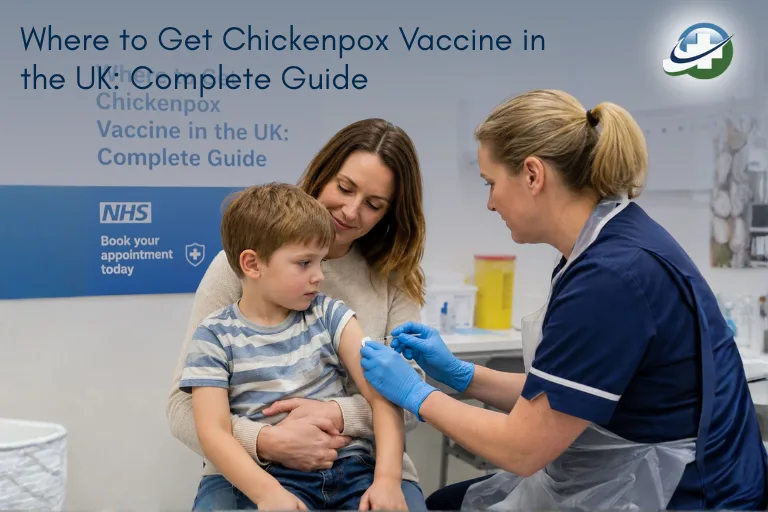
If you’re looking for where to get the chickenpox vaccine in the UK, you’re not alone. Thousands of parents, adults, and healthcare workers search for this every year — because unlike many other vaccines, the chickenpox vaccine is not routinely offered on the NHS to the general public.
In this complete guide, you’ll learn exactly where to get it, how much it costs, who needs it, and how to book your appointment today.
What Is the Chickenpox Vaccine?
The chickenpox vaccine protects against varicella zoster virus — the virus responsible for chickenpox. It is a live attenuated vaccine, meaning it contains a weakened form of the virus that trains your immune system to recognise and fight the real infection without causing the disease.
In the UK, two brands are licensed for use:
- Varivax — approved for children from 12 months and adults
- Varilrix — approved for children from 9 months and adults
Both are highly effective. Clinical studies show the vaccine is approximately 90% effective at preventing chickenpox and over 99% effective at preventing severe disease.
How Many Doses Do You Need?
- Children aged 1–12: Two doses, at least 3 months apart
- Teenagers and adults: Two doses, at least 4–8 weeks apart
A single dose provides good protection, but two doses give significantly stronger, longer-lasting immunity. Most private providers in the UK will recommend — and often require — both doses.
Is the Chickenpox Vaccine Available on the NHS?
This is one of the most common questions people ask, so let’s be clear: the chickenpox vaccine is not part of the routine NHS childhood vaccination schedule in England, Wales, or Northern Ireland.
Scotland follows the same policy.
Why Is It Not on the NHS?
The Joint Committee on Vaccination and Immunisation (JCVI) has reviewed this question multiple times. Their reasoning centres on concerns that widespread vaccination could shift the burden of disease to older adults, potentially increasing shingles rates in the short term — because exposure to natural chickenpox in children helps boost immunity to shingles in adults.
However, this position is under ongoing review, and several other countries — including the USA, Germany, and Australia — do include the chickenpox vaccine in their national schedules with positive outcomes.
Who Gets It Free on the NHS?
Despite not being routinely available, the NHS does offer the chickenpox vaccine for free to:
- Healthcare workers who have no immunity to chickenpox and are at risk of exposure
- Close contacts of immunocompromised individuals — for example, if someone in your household is receiving chemotherapy
- Non-immune adults or children who have been in contact with someone who has chickenpox or shingles (post-exposure prophylaxis — given within 3–5 days of exposure)
If you believe you fall into one of these categories, speak to your GP. They can check your immunity with a blood test and arrange the vaccine if you qualify.
How Much Does the Chickenpox Vaccine in the UK?
The cost of the chickenpox vaccine in the UK varies depending on the provider. Below is a general price guide based on 2024–2025 pricing. Always check the provider’s website for the most up-to-date prices before booking.
| Provider | Notes | |
| Boots | Per dose; two doses recommended | |
| Superdrug | Per dose | |
| LloydsPharmacy / Well | Per dose; varies by location | |
| Private GP | May include consultation fee | |
| Travel clinic | Per dose |
Tips to Reduce the Cost
- Check if your employer covers it — healthcare workers often have vaccination costs covered
- Ask about family packages — some clinics offer discounts when vaccinating multiple children
- Compare providers online before booking — prices can vary significantly even within the same city
- Check if your child qualifies for the NHS vaccine — especially if they are a close contact of an immunocompromised person
Who Should Get the Chickenpox Vaccine?
The chickenpox vaccine is recommended for a wide range of people in the UK. You should consider getting vaccinated if you or your child:
Children Who Have Not Had Chickenpox
While chickenpox is often a mild illness in children, it can occasionally cause serious complications including bacterial skin infections, pneumonia, and in rare cases encephalitis (brain inflammation). Vaccinating children eliminates this risk entirely.
The vaccine is especially recommended for children who:
- Have not had chickenpox before
- Are about to start nursery or school
- Have a sibling or parent who is immunocompromised
Adults Who Have Never Had Chickenpox
Chickenpox in adults is significantly more severe than in children. Adults are at much higher risk of complications, including chickenpox pneumonia, which can require hospitalisation.
If you have never had chickenpox and have never been vaccinated, getting the vaccine as an adult is strongly advisable particularly if you:
- Work with children
- Are planning a pregnancy (the vaccine cannot be given during pregnancy see below)
- Live with someone who is immunocompromised
Pregnant Women — Important Guidance
The chickenpox vaccine should NOT be given during pregnancy. Because it is a live vaccine, there is a theoretical risk to the developing baby.
However, if you are planning a pregnancy and have no immunity to chickenpox, you should get vaccinated before conceiving. After vaccination, you should avoid becoming pregnant for at least 4 weeks (most clinicians advise 3 months as a precaution).
If you are already pregnant and contract chickenpox, contact your GP or midwife immediately.
Healthcare and Childcare Workers
Anyone working in healthcare, schools, nurseries, or with vulnerable populations who has no immunity to chickenpox should be vaccinated. The NHS provides this free to healthcare workers speak to your occupational health department.
Immunocompromised Individuals and Their Contacts
The vaccine itself cannot be given to people with severely compromised immune systems (for example, those on chemotherapy). However, vaccinating the people around them known as cocooning helps protect them indirectly by reducing their exposure.
What to Bring to Your Appointment
- Photo ID (for adults)
- Your child’s Red Book (personal child health record) if available
- Details of any previous chickenpox vaccinations
- A list of any current medications or known allergies
- Any relevant medical history (particularly relating to immune conditions)
Chickenpox Vaccine Side Effects and Safety
The chickenpox vaccine has an excellent safety record. It has been used worldwide for over 30 years and is approved in the UK by the Medicines and Healthcare products Regulatory Agency (MHRA).
Common Side Effects
These are mild and usually resolve within a few days:
- Sore arm at the injection site (most common)
- Redness, swelling, or warmth at the injection site
- Mild fever
- Tiredness or feeling generally unwell
- A mild chickenpox-like rash (small red spots) — usually appearing 1–4 weeks after vaccination
Rare Side Effects
- Seizure due to fever (febrile convulsion) — rare and temporary
- Allergic reaction (anaphylaxis) — extremely rare; providers are trained to manage this
Is It Safe for Children?
Yes. The varicella vaccine is licensed for children from 9–12 months (depending on brand) and has been used safely in millions of children worldwide. The UK’s MHRA has approved both Varivax and Varilrix as safe for use in the UK.
Can You Get Chickenpox from the Vaccine?
In very rare casesa vaccinated person can develop a mild chickenpox-like illness from the vaccine strain. This is far milder than natural chickenpox and is not contagious in most circumstances. If a rash does develop, speak to your pharmacist or GP.
Frequently Asked Questions
Can adults get the chickenpox vaccine in the UK?
Yes. Adults who have never had chickenpox or been vaccinated can get the vaccine privately at pharmacies including Boots and Superdrug, or through a private GP or travel clinic. The NHS does not routinely offer it to adults, but may do so free of charge for healthcare workers or close contacts of immunocompromised individuals.
How long does the chickenpox vaccine last?
Studies suggest the vaccine provides long-lasting protection, with evidence of immunity lasting 20+ years after two doses. Some studies indicate it may provide lifelong protection, though this is still being monitored. Booster doses are not currently recommended in the UK.
Can you get the chickenpox vaccine at any age?
The vaccine can be given from 9–12 months of age through to adulthood. There is no upper age limit, though it is not suitable for people who are pregnant or severely immunocompromised. Speak to a pharmacist or GP if you are unsure whether it is suitable for you.
Is one dose of the chickenpox vaccine enough?
One dose offers approximately 80–85% protection against chickenpox. Two doses increase this to around 90–99%. Most providers in the UK recommend two doses for complete protection. If you have only had one dose previously, you can still receive a second dose to complete the course.
How soon after vaccination am I protected?
Protection begins to develop within 2–3 weeks of the first dose. Full protection from two doses is achieved approximately 6 weeks after the second dose. Avoid close contact with high-risk individuals (newborns, immunocompromised people) during this period.
Can you get chickenpox even if you’ve been vaccinated?
Breakthrough infections can occur but are much milder than natural chickenpox typically fewer than 50 spots, little or no fever, and faster recovery. This is more common after just one dose, which is another reason two doses are recommended.
Is the chickenpox vaccine the same as the shingles vaccine?
No but they are related. Both target the varicella zoster virus. The shingles vaccine is specifically designed for older adults to prevent the virus from reactivating as shingles later in life. The chickenpox vaccine is for people who have not yet been exposed to the virus.
Final Thoughts
Getting the chickenpox vaccine is a straightforward, safe, and effective way to protect yourself or your child from an illness that while often mild can cause serious complications in some people. In the UK, the simplest route for most people is booking privately through Boots, Superdrug, or a local pharmacy clinic.
If you are unsure whether you or your child have had chickenpox before, a GP or pharmacist can arrange a simple blood test to check before booking.