
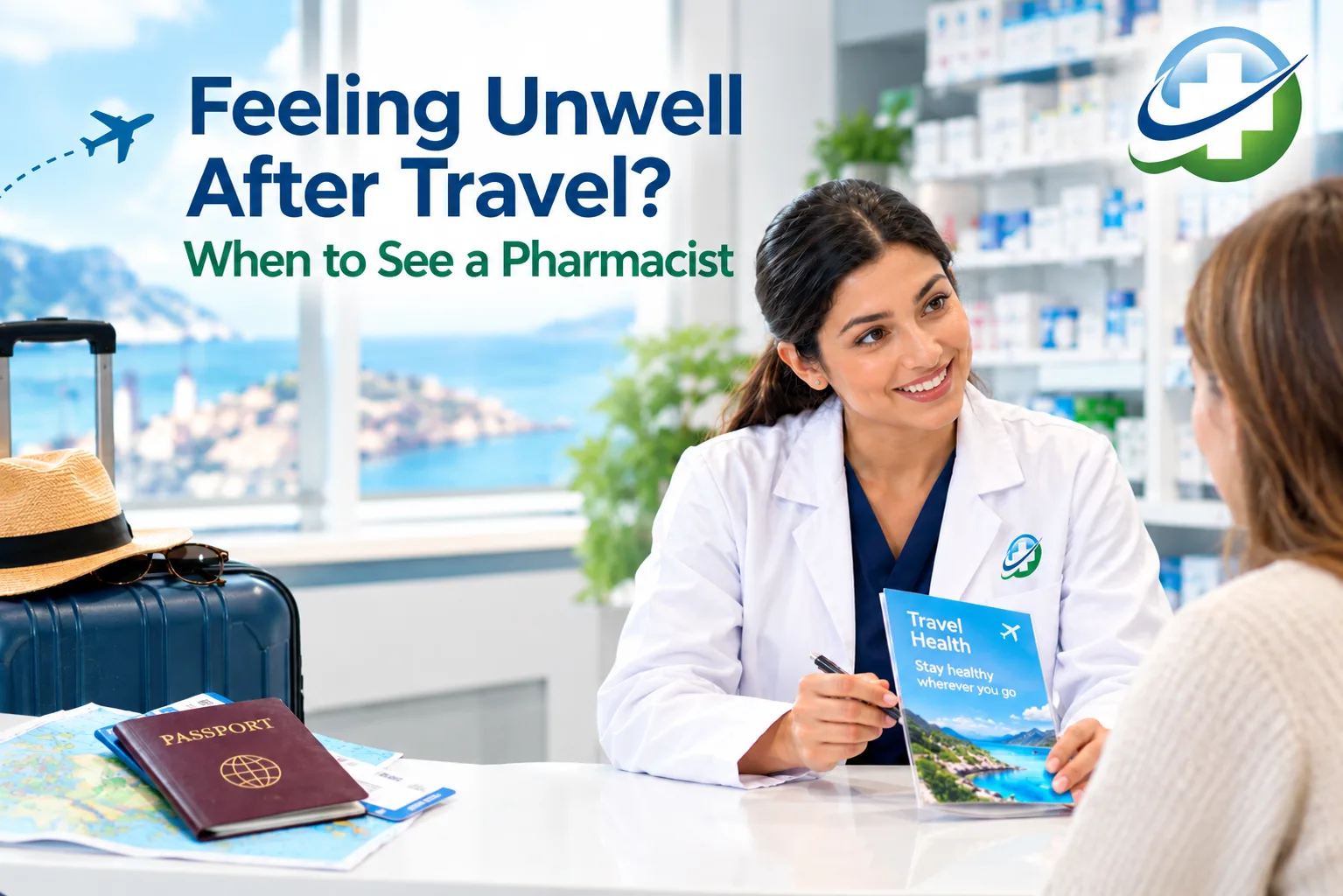
If you’ve come home from a trip and started feeling unwell after travelling off, you’re not imagining it. Most post-travel illness is mild and settles on its own within a few days. But a small number of symptoms are red flags that need same-day medical attention, especially after travel to tropical or subtropical regions.
Here’s the short version: a low fever, tiredness, or an upset stomach in the first day or two at home is usually nothing serious. A high fever, a rash that comes with fever, persistent vomiting, or yellowing of the skin or eyes needs urgent care, not a wait-and-see approach. If you’re ever unsure which category you’re in, the pharmacy team at Burnham Health Pharmacy can help you work it out and point you to the right next step.
Why Some Illnesses Only Appear After You Get Home
Not every travel-related illness shows up while you’re still away. Many infections have an incubation period, the gap between exposure and symptoms, that can run from a few days to several weeks. Malaria is a well-known example: symptoms can appear anywhere from a week to a few months after you’ve left a risk area, which is exactly why people are sometimes caught off guard weeks after returning to normal life.
This delay is also why travel history matters so much when working out what’s going on. A fever that would look unremarkable on its own becomes a different conversation entirely once someone knows you were in a malaria-risk country a month ago.
Common Causes of Post-Travel Illness
Most post-travel symptoms fall into a handful of familiar categories. Knowing which one you’re dealing with helps you judge how urgent it is.
Traveller’s Diarrhoea and Stomach Upsets
Stomach upsets are by far the most common travel-related complaint. They’re usually caused by contaminated food or water and typically involve loose stools, cramping, and general fatigue. Most cases clear up within a few days with rest and proper fluids. It becomes more concerning if there’s blood in the stool, a fever that won’t settle, or if symptoms drag on for more than a week without improvement.
Mosquito and Insect-Borne Illness
Bites picked up abroad can carry more risk than the itch suggests. Depending on the region, mosquito bites can transmit illnesses like malaria, dengue, or chikungunya, some of which don’t show symptoms until well after you’re home. A bite that becomes increasingly red, swollen, warm, or painful in the days after travel could also mean a local skin infection rather than anything transmitted by the bite itself. If a bite site looks infected, it’s worth reading our guide on infected skin bites to understand what to watch for.
Red-Flag Symptoms That Need Urgent Attention
Some symptoms shouldn’t wait for a “let’s see how it goes” approach, particularly after travel to malaria-risk or tropical regions. Seek urgent medical care if you notice:
- A high fever, especially one that comes in waves or spikes suddenly
- Persistent vomiting that stops you keeping fluids down
- A rash accompanied by fever
- Jaundice (yellowing of the skin or eyes)
- Severe headache with neck stiffness or confusion
- Difficulty breathing or chest pain
- Signs of dehydration, such as reduced urination or dizziness on standing
Any one of these, on its own, is a reason to be seen the same day rather than waiting it out.
When a Pharmacist Can Help vs When to See a GP or A&E
A pharmacist is often the fastest and most practical first stop when you’re feeling unwell after travel and not sure how serious it is. The team can assess your symptoms, ask about where you’ve been and what you’ve been exposed to, and advise whether this looks like something that will settle on its own or something that needs a doctor’s attention. This kind of quick triage is especially useful when you’re feeling anxious and just want a clear answer.
A GP appointment makes sense for symptoms that are persistent, unusual, or don’t fit a simple explanation, particularly if you’ve returned from a malaria-risk area and have any fever at all. A&E or emergency care is the right call for the red-flag symptoms listed above, or for anything that feels rapidly worsening.
Why Your Travel History Matters to Any Doctor You See
Wherever you end up, tell whoever is treating you exactly where you travelled, how recently, and what kind of exposure you had (insect bites, untreated water, animal contact, and so on). Fever with a travel history to certain regions gets investigated very differently to fever with no travel involved, because the list of possible causes changes completely. This is one of the most common reasons post-travel illness gets misdiagnosed or delayed, simply because the travel detail didn’t come up early enough in the conversation.
Reducing Your Risk on Future Trips
Good preparation before you leave makes a real difference to what you might deal with when you get back. This includes getting the right vaccinations for your destination, taking appropriate precautions against mosquito bites, and being careful with food and water in higher-risk areas. Our Travel Clinic can talk you through what’s recommended for your specific destination well before you travel, and our guide on Yellow Fever vaccination is a useful starting point if that’s relevant to where you’re headed.
Frequently Asked Questions
1. How soon after returning home do travel illnesses usually appear?
It varies widely. Some illnesses, like traveller’s diarrhoea, tend to show up within days. Others, like malaria, can take a week to several months to appear because of longer incubation periods. This is why symptoms weeks after a trip shouldn’t automatically be dismissed as unrelated to travel.
2. What symptoms after travel should never be ignored?
High fever, persistent vomiting, a rash with fever, jaundice, and confusion or neck stiffness are all red flags that need same-day medical attention rather than a wait-and-see approach.
3. Can a pharmacist tell if my symptoms are travel-related?
A pharmacist can assess your symptoms alongside your travel history and help you understand whether this looks minor or needs a GP or emergency assessment. They’re a good first point of contact when you’re unsure how urgent your symptoms are.
4. Should I get tested even if I feel better after a few days?
If your symptoms fully resolve and you feel well, testing usually isn’t necessary. But if you had a fever at any point after travel to a malaria-risk area, it’s worth getting checked even if you’re feeling better now, since some illnesses can resurface.
Feeling unwell after a trip?
Speak to the team at Burnham Health Pharmacy as your first point of contact. We can help you work out whether your symptoms need pharmacy advice, a GP appointment, or urgent care and guide you from there.