
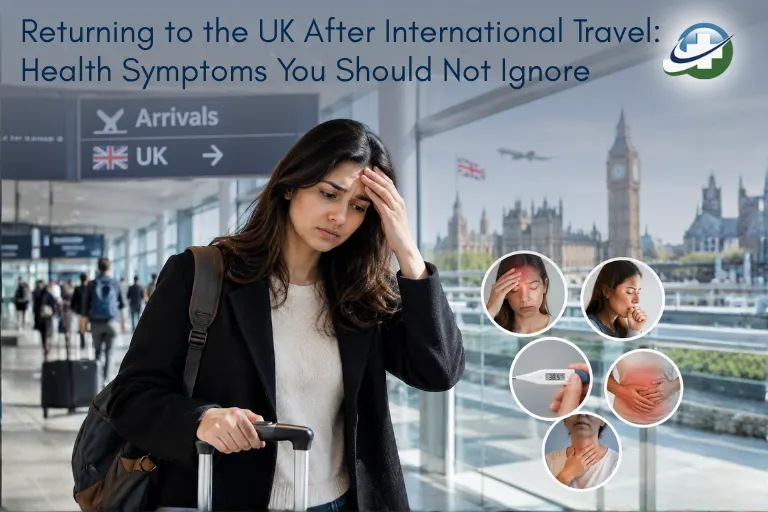
You unpack, put the washing on and settle back into normal life. A few days later you feel hot, shivery or just off. It is easy to blame jet lag, a cold or a tiring trip, and most of the time that is exactly what it is. But health after international travel deserves a little extra attention, because some infections picked up abroad take days or weeks to show themselves, and a few need urgent treatment.
This guide explains which symptoms to watch for after you get back to the UK, how long they can take to appear, and when to call 999, NHS 111, your GP or a pharmacist. It is written for ordinary travellers, whether you have been to a beach resort, visited family overseas or spent weeks backpacking. If you are already thinking about your next trip, our travel clinic can help you prepare.
If you develop a fever, bloody or lasting diarrhoea, yellow skin or eyes, a new rash, difficulty breathing or a swollen, painful leg after travelling abroad, get medical advice promptly and tell the clinician of every country you visited. A fever after visiting a malaria risk area needs same-day medical assessment, even weeks or months after you return.
Why Health After International Travel Needs Extra Attention
Most travellers come home well. A mild stomach upset or a cold usually passes without treatment. Returning travellers are treated differently because of timing. Many infections have an incubation period, which is the gap between catching the infection and feeling ill. That gap can be shorter than the flight home or longer than the holiday itself.
Doctors in the UK see tropical infections less often than doctors in the countries where they are common, so your travel history is one of the most useful clues you can give. Without it, malaria, dengue or typhoid can look like flu or a stomach bug.
How Long After Travel Can Symptoms Appear?
The timings below are typical for some of the illnesses covered in this guide. They are general guides, not rules. Your own risk depends on where you went, what you did and which vaccines or tablets you took.
| Illness | Typical time to symptoms | Main warning signs |
| Dengue | 4 to 10 days after a bite | Sudden high fever, severe headache, pain behind the eyes, muscle and joint pain, rash |
| Chikungunya | 3 to 7 days | Fever, severe joint pain, rash |
| Malaria | About 1 week to 3 months, occasionally up to a year | Fever, chills, sweats, headache, vomiting, aching muscles |
| Typhoid and paratyphoid | 1 to 3 weeks | Fever that rises over days, headache, stomach pain, constipation or diarrhoea |
| Hepatitis A | 2 to 6 weeks | Tiredness, nausea, dark urine, pale stools, yellow skin or eyes |
| Giardia and other gut parasites | 1 to 2 weeks | Watery diarrhoea lasting over a week, bloating, cramps, foul-smelling wind |
| Schistosomiasis | A few weeks after freshwater swimming | Fever, itchy rash, cough, tiredness |
| Blood clot (DVT) | During or in the weeks after a long journey | Painful, swollen, warm calf or leg |
If you feel unwell and your trip fits one of these windows, say so at the start of any appointment.
Fever After Travel: The Symptom Never to Ignore
A temperature of 38°C or above, or feeling feverish with chills and sweats, is the most important warning sign after international travel. Many serious travel infections begin with nothing more than a fever, so it should not be put down to a bug without a proper assessment.
Malaria Symptoms After Travel
Malaria is spread by infected mosquitoes in parts of Africa, Asia, Central and South America and some other regions. Early symptoms look like flu: fever, chills, sweating, headache, muscle aches, tiredness, nausea and vomiting. Some people also have diarrhoea or a cough. Symptoms usually appear between about one week and three months after a bite, although some types can lie dormant in the liver and cause illness many months later.
Malaria is a medical emergency, but it is treatable when caught early. Anyone with a fever after visiting a malaria area should have a same-day assessment through their GP, an urgent treatment centre or NHS 111. If you feel very unwell, go to A&E.
Taking tablets does not rule malaria out. No tablet gives 100% protection, and missed doses or stopping early raise the risk. UK health authorities have repeatedly found that many imported malaria cases involve people visiting friends and relatives overseas who did not take preventive tablets. Our guide to anti-malaria tablets explains how they work and how long to keep taking them.
Dengue, Chikungunya and Other Mosquito-Borne Infections
Dengue is spread by mosquitoes that bite during the day and is now common in many holiday destinations across Asia, the Americas, Africa and the Pacific. Symptoms include sudden high fever, severe headache, pain behind the eyes, muscle and joint pain, nausea and a rash. Most people recover within about a week, but a small number develop severe dengue, often as the fever starts to settle.
Get urgent help if you have severe stomach pain, persistent vomiting, bleeding from the gums or nose, blood in vomit or stools, breathlessness or extreme drowsiness. Take paracetamol for fever and drink plenty of fluids, but avoid ibuprofen and aspirin until a clinician has ruled out dengue, because they can raise the risk of bleeding. Our post on dengue fever prevention tips for UK travellers covers bite avoidance in more detail.
Chikungunya causes a similar fever with intense joint pain that can last for weeks. A vaccine now exists for some travellers, and you can read about the chikungunya vaccine and whether it suits your plans.
Typhoid and Paratyphoid Fever
Typhoid and paratyphoid spread through contaminated food and water. The fever tends to climb over several days, often with headache, tiredness, stomach pain and either constipation or diarrhoea. Without treatment it can become serious.
The typhoid vaccine does not give complete protection and does not cover paratyphoid, so symptoms after travel still need checking even if you were vaccinated. You can read more about typhoid vaccination before your next trip.
Stomach and Bowel Problems After Travelling Abroad
Diarrhoea That Does Not Settle
Traveller’s diarrhoea affects many people abroad and usually clears within a few days. Seek medical advice if you have:
- Blood or mucus in your stools
- Diarrhoea lasting longer than a week
- A high temperature or severe stomach pain
- Signs of dehydration, such as very dark urine, dizziness, a dry mouth or passing little urine
- Vomiting that stops you keeping fluids down
- Diarrhoea that starts or returns weeks after you get home
Oral rehydration sachets from a pharmacy are the first line of help. Avoid anti-diarrhoeal medicines such as loperamide if you have blood in your stools or a high fever. Diarrhoea that drags on after tropical travel can be caused by parasites such as Giardia, which need a stool test and specific treatment from your GP. If you work with food or in health or social care, stay off work until 48 hours after your last symptoms.
Yellow Skin, Dark Urine and Hepatitis A
Hepatitis A is a liver infection spread through contaminated food and water. Adults tend to be more unwell than children. Look for tiredness, nausea, loss of appetite, dark urine, pale stools and yellowing of the skin or eyes. Anyone with jaundice should see a GP promptly. Vaccination gives long-lasting protection, and you can find details on our hepatitis A vaccine page.
Breathing, Chest and Cough Symptoms
Aeroplanes, crowded hotels, festivals and pilgrimage sites make it easy to pick up respiratory infections such as flu, COVID-19 and pneumonia. A cough or sore throat that clears within a week or two is common. See your GP if:
- A cough lasts longer than three weeks
- You cough up blood
- You have night sweats or unexplained weight loss, which can point to tuberculosis
- You develop a fever and cough within about two weeks of staying in a hotel or spa, as Legionnaires’ disease is linked to contaminated water systems
Call 999 for severe breathlessness, chest pain or blue lips.
Skin Problems, Bites and Animal Contact
Rashes and Infected Bites
A new rash with a fever after travel needs same-day advice. A rash on its own, such as an itchy, winding red track on the skin after walking barefoot on a beach, or a sore that will not heal, should also be checked.
Ordinary insect bites settle within a day or two. A bite that is still red, hot, swollen or painful after 24 to 48 hours may be infected. A pharmacist can assess bites and stings in people aged one year and over, and you can read about our infected skin bites service. Call 999 for swelling of the face or throat, breathing difficulty or faintness after a bite or sting.
Animal Bites, Scratches and Licks
If a dog, cat, monkey or bat bit or scratched you abroad, or licked broken skin, do not wait for symptoms. Rabies is almost always fatal once symptoms start, but it is preventable with prompt treatment after exposure. If you did not get treatment abroad, contact NHS 111 or your GP urgently when you return, even if the wound has healed. Our guide to rabies vaccination and treatment explains what happens next.
Freshwater Swimming and Schistosomiasis
Swimming or paddling in freshwater lakes and rivers, especially in parts of Africa, can expose you to the parasite that causes schistosomiasis. Symptoms such as fever, an itchy rash, cough and tiredness can appear a few weeks later. Tell your doctor about any freshwater swimming.
Blood Clots After Long Journeys
Long flights, train rides and car journeys raise the risk of deep vein thrombosis (DVT). Warning signs are a painful, swollen, warm or red calf, usually on one side. A clot that travels to the lungs causes sudden breathlessness, sharp chest pain that is worse when you breathe in, a fast heartbeat or coughing up blood. Call 999 for these symptoms. A clot can develop in the days and weeks after a long journey, not just during it.
Urinary, Sexual Health and Slow-Burning Symptoms
Burning when you pass urine, needing to go more often and lower tummy pain suggest a urinary tract infection. Some eligible women can be treated without a GP appointment under the NHS Pharmacy First scheme, and you can read about our uncomplicated UTI service. If you had unprotected sex abroad, consider a sexual health check even without symptoms, because many infections cause none. NHS sexual health clinics are free and confidential.
Some problems build slowly. Jet lag usually settles within a few days, so see your GP if you notice:
- Tiredness that lasts beyond two weeks
- Unexplained weight loss
- Drenching night sweats
- A low-grade temperature that keeps returning
- Swollen glands or a persistent itch
Where to Go: 999, NHS 111, GP or Pharmacist
| Where to go | When |
| Call 999 or go to A&E | Severe breathing difficulty, chest pain, collapse, seizure, confusion or severe drowsiness, coughing or vomiting blood, swollen face or throat after a bite |
| Call NHS 111 or seek same-day care | Any fever after visiting a malaria area, high fever with severe headache or rash, bloody diarrhoea, jaundice, dehydration, a swollen painful leg, an animal bite abroad |
| Book a GP appointment | Diarrhoea beyond a week, cough beyond three weeks, lasting fatigue or weight loss, sores that do not heal, joint pain that will not go away |
| Speak to a pharmacist | Mild stomach upset, rehydration advice, insect bites, urinary symptoms, or questions about whether your symptoms need urgent care |
If you go to A&E or an urgent care centre, say at the start that you have recently travelled and where.
What to Tell the Doctor After Your Trip
Clear information speeds up diagnosis. Before you are seen, write down:
- Every country and region you visited, including stopovers and dates
- Whether you stayed in cities, rural areas or camps
- Mosquito, tick or other bites, and any animal contact
- Street food, untreated water or ice in drinks
- Any freshwater swimming
- Vaccines and malaria tablets you took, and whether you finished the course
- Your regular medicines, as our guide to travelling abroad with medication explains
- Medical or dental treatment, injections, tattoos or piercings abroad
- Whether anyone you travelled with is also unwell
Start with “I have recently travelled to…” and keep a simple timeline of when your symptoms began and how they changed.
Looking After Yourself in the First Weeks Home
- Check your temperature if you feel hot or shivery and note the readings.
- Drink plenty of fluids, and rest if you are unwell.
- Keep taking malaria tablets for the full period after leaving the risk area. This ranges from 7 days to 4 weeks depending on the tablet.
- Do not use leftover antibiotics to treat a fever.
- Check NHS Blood and Transplant rules before donating blood after travel.
How a Pharmacist Can Help With Health After International Travel
Pharmacy teams can listen to your symptoms, tell you whether they sound minor or need urgent attention, recommend rehydration and treat some bites and urinary infections under NHS Pharmacy First. A pharmacist cannot diagnose malaria or dengue, which need blood tests, but we can point you to the right service quickly.
At Burnham Health Pharmacy, we offer travel vaccinations, malaria prevention advice and travel health consultations from 30 High Street, Burnham, and you are welcome to ask us about symptoms after you return. Our post on feeling unwell after travel explains when a pharmacist is the right first stop.
For future trips, book a travel consultation 6 to 8 weeks before you leave so vaccines have time to work. Our travel health advice before international travel is a good place to start.
Frequently Asked Questions
1. What symptoms should I look out for after returning from abroad?
Watch for fever, chills, severe or bloody diarrhoea, yellow skin or eyes, a new rash, a cough lasting over three weeks, breathing difficulty, and a swollen, painful leg. Fever is the most important, especially after visiting a malaria area.
2. How long after travel can you get sick?
It depends on the infection. Dengue usually appears within 4 to 10 days, typhoid within 1 to 3 weeks, and hepatitis A within 2 to 6 weeks. Malaria usually shows within 3 months, but can appear up to a year later.
3. Should I worry about a fever after travelling abroad?
Yes. A fever after international travel should be assessed promptly. After visiting a malaria area it needs same-day medical assessment, even if you took tablets and even if you feel only mildly unwell.
4. Can I get malaria even if I took tablets?
Yes. No malaria tablet is 100% effective, and missed doses or stopping early raise the risk. Anyone with a fever after returning from a malaria area should seek same-day medical advice and mention the tablets they took.
5. When should I see a doctor for diarrhoea after travel?
See a doctor if you have blood in your stools, diarrhoea for more than a week, a high fever, severe stomach pain or signs of dehydration. Seek advice too if it starts weeks after you return.
6. Can a pharmacist help if I feel unwell after a trip?
Yes. A pharmacist can assess minor symptoms, advise on rehydration, help with bites and some urinary infections, and direct you to urgent care if needed. They cannot diagnose conditions such as malaria, which need blood tests.
7. Do I need to tell my GP that I have travelled?
Yes. Your travel history helps a clinician think of infections that are rare in the UK. Tell them every country you visited, the dates, and any bites, animal contact or freshwater swimming.
8. How can I reduce my risk on future trips?
Book a travel health consultation 6 to 8 weeks before you leave, take any advised vaccines and malaria tablets, use insect repellent, and choose safe food and water. Your pharmacist can tailor advice to your destination.
Key Takeaways
- Fever after travel is never something to wait out, especially after visiting a malaria area.
- Symptoms can appear days, weeks or even months after you return.
- Tell every clinician where you have been, when, and what you did.
- Use 999 for emergencies, NHS 111 for urgent advice and your pharmacist for minor symptoms and guidance.
Unwell After a Trip, or Planning the Next One?
If something does not feel right since you got home, do not wait it out. Whether you need advice on symptoms, want to check a bite, or are planning vaccinations and malaria protection for your next holiday, our team at Burnham Health Pharmacy is here to help.
Contact our team or book an appointment online, or call us on 01628 603 170. You can find us at 30 High Street, Burnham, SL1 7JP. If you are very unwell, call 999 or NHS 111 instead of waiting for an appointment.